













Industrial Drum Spill Containment
Drum Containment Systems for Safer Storage and Spill Control
Protect personnel, floors, drains, and surrounding work areas with secondary containment designed for storing, staging, dispensing, and handling industrial drums.
DockStar Industrial offers spill pallets, low-profile spill decks, and covered hard-top units for one-drum, multi-drum, indoor, outdoor, and modular containment applications.
01
Capture Leaks and Spills
Keep released liquid inside a defined sump beneath the drum storage area.
02
Improve Drum Handling
Select low-profile or accessible designs that simplify loading and dispensing.
03
Protect the Facility
Reduce migration toward aisles, equipment, drains, doorways, and soil.
04
Match the Application
Choose individual, modular, covered, forkliftable, or high-capacity systems.
Secondary Containment for Drums
Build the Containment Area Around the Way Drums Are Used
Drum containment is not only a storage decision. It also affects how operators load drums, dispense liquids, move containers, inspect the sump, and respond when a leak occurs.
Spill pallets provide a defined sump beneath individual or grouped drums. Spill decks create a lower working surface that can be connected into larger modular layouts. Hard-top systems add weather-resistant, lockable protection for drums stored outdoors or in exposed locations.
The right solution depends on the number and size of drums, the liquid being stored, the required containment volume, available floor space, forklift access, dispensing activity, and whether the system will be used indoors or outdoors.
Common Drum Containment Applications
Chemical Drum Storage
Contain leaks beneath acids, corrosives, cleaners, and process chemicals.
Oil and Lubricant Storage
Protect floors and nearby work areas from drips and dispensing spills.
Waste Collection Areas
Create secondary containment beneath satellite waste drums and containers.
Dispensing Stations
Support pumps, funnels, hoses, and smaller containers used during transfer.
Maintenance Departments
Store fluids, coolants, cleaners, and recovered liquids near service areas.
Outdoor Drum Storage
Use covered systems that shield drums and the containment sump from weather.
Choose the Right Platform for the Drum Storage Area
Compare sump depth, working height, modularity, weather protection, container capacity, loading access, and the way drums will be stored or dispensed.
 01
01
Individual and Multi-Drum Storage
Explore Spill Pallets for Drums
Spill Pallets for Drums
Dedicated secondary containment platforms with integrated sumps for storing one or more drums above captured liquid.
Spill pallets are a practical choice when a facility needs a defined containment capacity beneath a compact drum storage footprint. Options may include one-, two-, three-, or four-drum configurations, low-profile designs, nestable models, steel construction, flexible inline systems, and containment for drum racks.
Best For
- Primary drum storage areas
- Chemical and waste collection
- Facilities requiring a deeper containment sump
- One-drum through multi-drum configurations
Features to Consider
- Overall sump capacity
- Load and weight rating
- Forklift access and relocation
- Grate removal and cleanup access
 02
02
Low-Profile and Modular Containment
Explore Spill Decks for Drums
Spill Decks for Drums
Low-profile drum storage decks that simplify loading while allowing several units to be connected into a larger containment area.
Spill decks are useful where working height and easy drum access are priorities. Their lower profile reduces the lift required to place drums on the containment surface, while modular models can be joined to support larger storage or dispensing layouts.
Best For
- Frequent loading and unloading
- Drum dispensing and transfer areas
- Modular containment floors
- Facilities with limited vertical clearance
Features to Consider
- Deck height and loading access
- Connection between multiple units
- Drain plugs and cleanup procedures
- Grate construction and chemical resistance
 03
03
Covered Outdoor Drum Storage
Explore Hard Tops for Drums
Hard Tops for Drums
Lockable, weather-resistant containment systems that protect drums and help preserve available sump capacity in outdoor environments.
Hard-top units combine a spill pallet base with an enclosed upper structure. Roll-top or swing-door access can simplify drum loading and dispensing, while the covered design helps keep precipitation and debris out of the containment area.
Best For
- Outdoor drum storage
- Secure chemical and waste areas
- Locations exposed to rain and debris
- Facilities requiring lockable access
Features to Consider
- Door style and opening clearance
- Forklift and pallet loading access
- UV and weather resistance
- Ramp compatibility and drum handling
Drum Containment Selection Guide
What Should You Review Before Selecting a System?
Start with the number of drums, the maximum potential release, how often drums are moved, and whether the storage area is indoors, outdoors, or exposed to vehicle and forklift traffic.
01
Drum Quantity and Size
Determine whether the area supports one drum, several drums, or drum racks.
02
Required Sump Capacity
Choose containment volume based on the potential release and facility requirements.
03
Chemical Compatibility
Confirm that the pallet, deck, grate, liner, or steel construction suits the liquid.
04
Loading and Dispensing
Consider drum trucks, forklifts, ramps, pumps, funnels, hoses, and bucket shelves.
05
Indoor or Outdoor Use
Review weather exposure, UV resistance, covers, security, and rainwater management.
06
Inspection and Cleanup
Plan for grate removal, draining, sump inspection, cleaning, and liquid disposal.
Product Selection Support
More Than a Drum Count
Two facilities storing the same number of drums may need very different containment solutions. DockStar Industrial can help review container dimensions, liquid type, storage environment, access, working height, sump capacity, and material-handling needs before a product is selected.
Application Review
Evaluate the drum layout, floor space, travel path, and operating conditions.
Product Comparison
Compare spill pallets, low-profile decks, covered units, and specialty models.
Capacity and Access
Balance containment volume with loading height, mobility, and dispensing access.
Site-Specific Guidance
Use measurements, photos, container details, and workflow information to narrow options.
Need Help Selecting Drum Containment?
Talk to a Product Specialist
Match the Sump, Platform, and Cover to the Storage Area
Tell us how many drums you are storing, what they contain, where they are located, and how they are loaded or dispensed. We will help identify the most practical containment approach.


Explore More Products


Answers About Spill Pallets, Spill Decks, and Drum Hard Tops
Drum containment systems help capture leaks, support safer storage, and protect surrounding work areas. These answers cover the most common questions about selecting and using secondary containment for industrial drums.
What is drum spill containment?
Drum spill containment is a secondary containment system placed beneath one or more drums to capture leaks, drips, and accidental releases. Common options include spill pallets, low-profile spill decks, and covered hard-top units.
What is the difference between a spill pallet and a spill deck?
Spill pallets typically provide a deeper sump beneath a compact drum-storage footprint. Spill decks are lower-profile and are often easier to load. Many deck systems can also be connected to create a larger modular containment surface.
When should I use a spill pallet for drums?
Spill pallets are a strong choice for dedicated drum-storage areas, chemical and waste collection, and applications that require a defined sump beneath one or more drums. They are available in individual and multi-drum configurations.
When is a low-profile spill deck a better option?
Spill decks are useful where frequent loading, unloading, and dispensing make working height important. Their lower profile can reduce the lift required to place drums on the containment surface, and modular models can be joined for larger layouts.
What are drum hard tops used for?
Drum hard tops combine a spill pallet base with a covered, weather-resistant enclosure. They are commonly used for outdoor drum storage, secure chemical or waste areas, and locations where rain and debris could reduce available sump capacity.
Can drum containment systems be used outdoors?
Many drum containment products can be used outdoors, but weather, ultraviolet exposure, rainwater accumulation, wind, covers, and inspection frequency should be considered. Covered hard-top units are often preferred for long-term outdoor storage.
How much sump capacity do I need?
Required capacity depends on the number and size of the drums, the maximum potential release, facility procedures, and applicable regulatory requirements. Confirm the needed containment volume before selecting a pallet, deck, or covered system.
Why is chemical compatibility important?
The pallet, deck, grate, liner, seal, or steel construction must be suitable for the liquid it may contact. Chemicals can affect polyethylene, coated materials, metals, and other containment components differently.
Can spill pallets and decks be moved with a forklift?
Many models include forklift pockets or molded access points, but handling instructions vary by product. Confirm whether a unit may be moved while empty or loaded and follow the manufacturer’s handling guidance.
Can ramps be used with drum containment products?
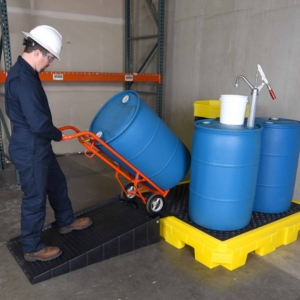
Some spill pallets, decks, and hard-top systems are compatible with ramps that support drum trucks and other handling equipment. Check the ramp angle, load rating, available floor space, and product compatibility before use.
Can drums be dispensed while they are on containment?
Yes. Many systems support pumps, funnels, hoses, and dispensing accessories. The layout should allow operators to work safely while keeping drips and transfer spills within the containment area.
Can multiple spill decks be connected together?
Many modular spill-deck systems can be connected to create a larger containment floor for several drums or dispensing stations. Confirm how liquid transfers between connected units and how the combined sump capacity is calculated.
How should rainwater be managed in outdoor containment?
Outdoor containment should be inspected regularly so rainwater does not reduce available sump capacity. Any liquid removed from the containment area should be evaluated and managed according to the material present and the facility’s environmental procedures.
How often should drum containment systems be inspected?
Inspection frequency should reflect the stored liquid, product, location, and facility procedures. Check for captured liquid, cracks, corrosion, damaged grating, blocked drains, weather damage, and reduced containment capacity.
How are spill pallets and decks cleaned?
Cleaning usually involves removing the drums and grating, recovering captured liquid, and cleaning the sump using methods appropriate for the material present. Personnel should follow the facility’s safety, waste-handling, and environmental procedures.
What information should I provide when requesting a quote?
Provide the number and size of drums, liquid being stored, required containment volume, indoor or outdoor location, available space, loading method, dispensing needs, forklift or drum-truck access, preferred cover style, and any photos or measurements of the area.
Check out some of our recent projects!
Real Projects. Real Customers. Real Solutions.
DockStar Industrial coordinated a large commercial wire mesh storage locker project, including delivery follow-up, supplier coordination, installation planning, site visit support, and final project details for approximately 100 storage lockers.
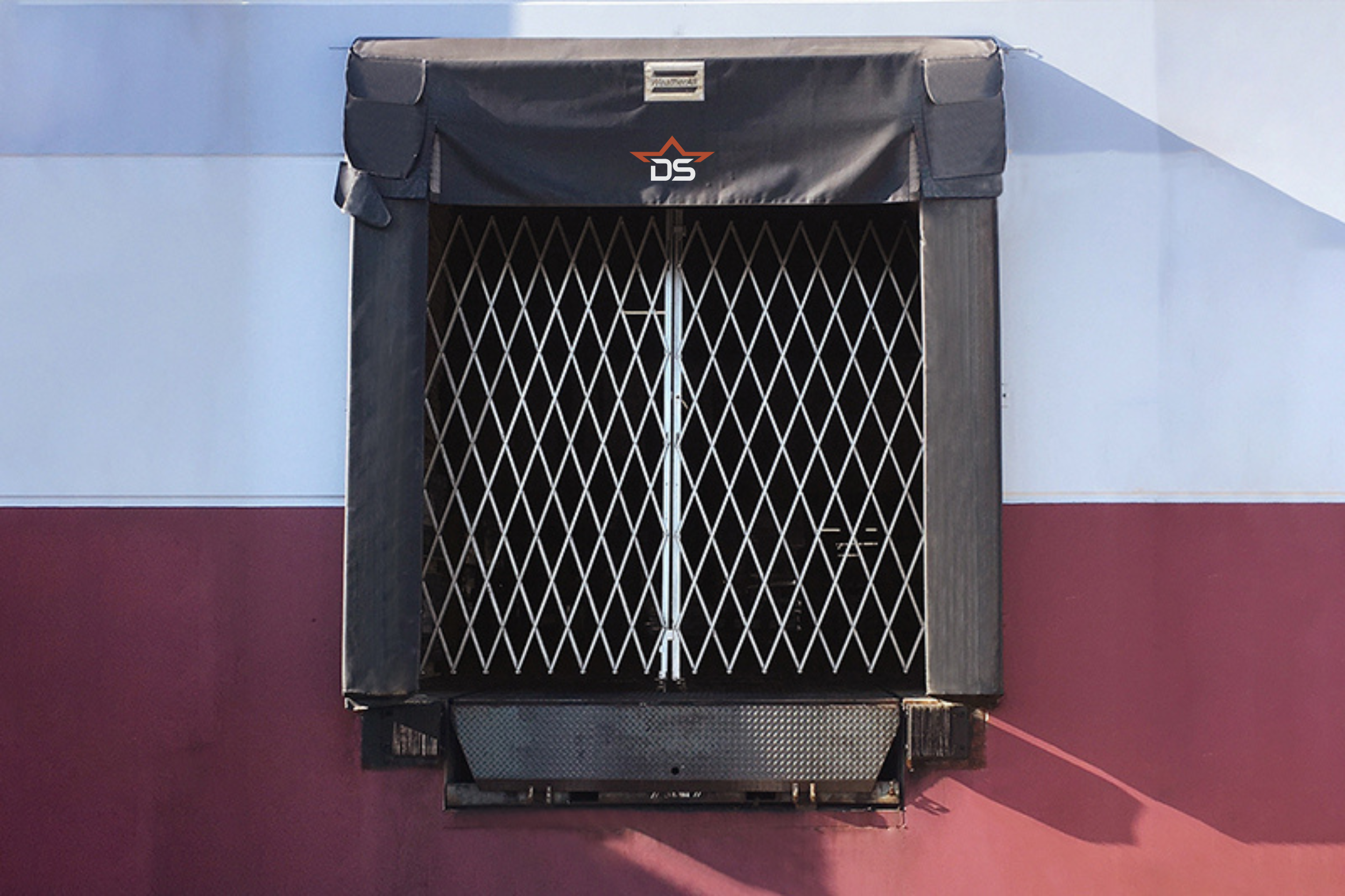
Read MoreDockStar Industrial supplied and installed a railcar dock seal for an industrial loading door, helping improve weather protection, reduce air and debris intrusion, and support railcar loading operations.
Read MoreDockStar Industrial supplied wire security storage lockers for a new apartment building in Mineola, Long Island. The project included 4' x 4' x 7'-6" tenant storage lockers designed for secure resident storage, bike storage, and efficient storage room organization.
Read More