












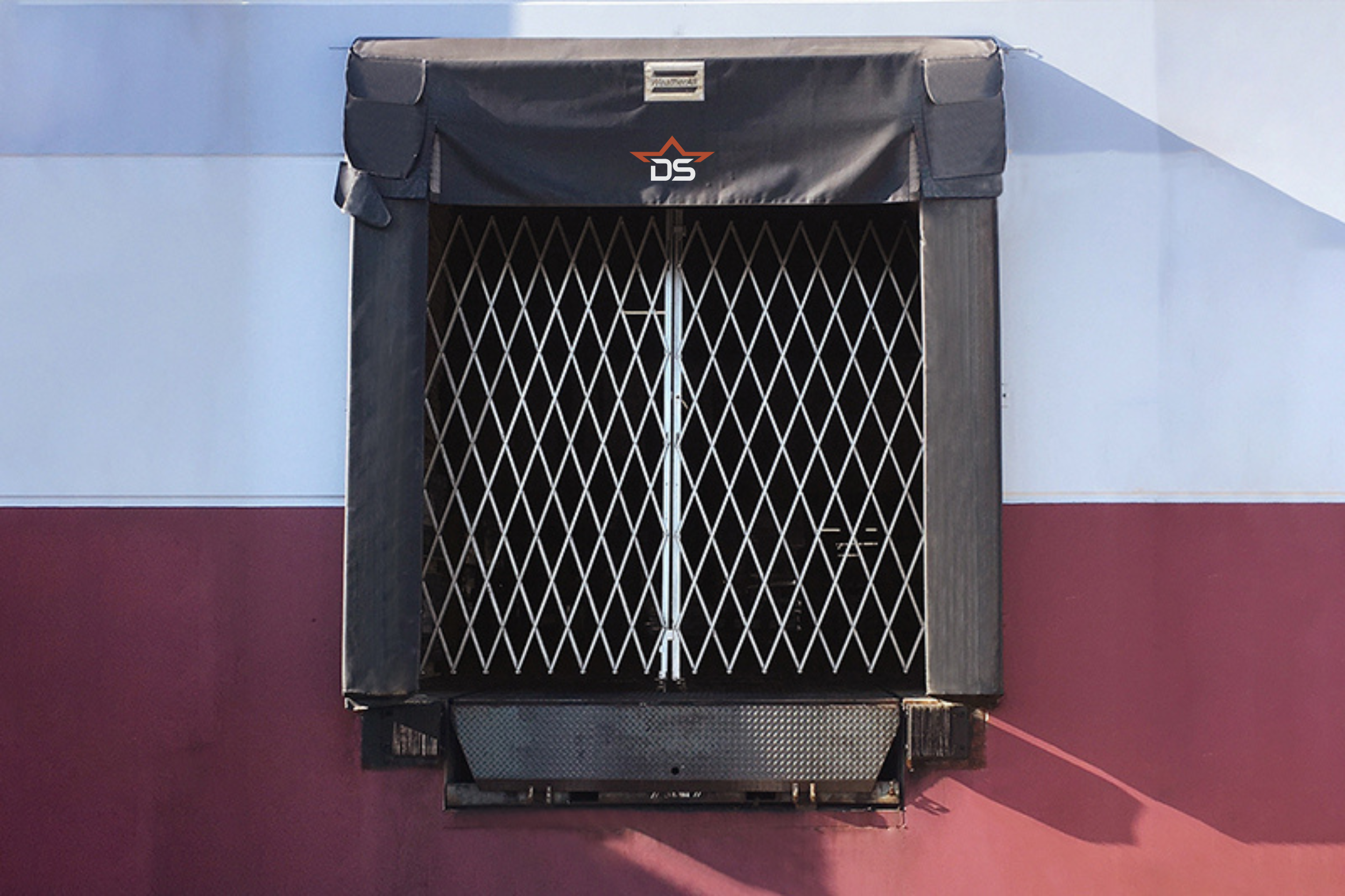

Kick Plate
Definition
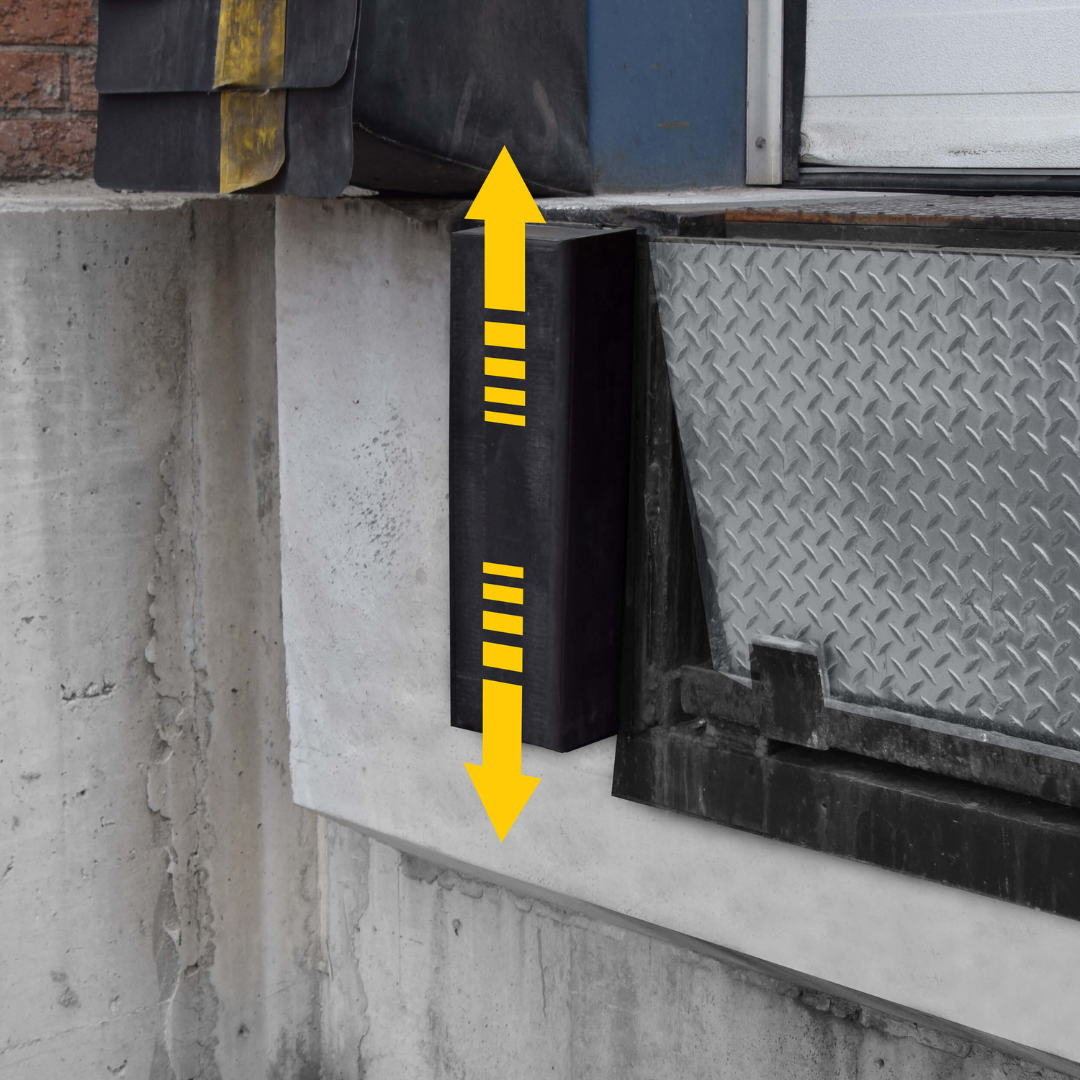
A kick plate, also called a toe guard, is a hinged metal guard mounted along the sides of a dock leveler that closes the gap between the leveler platform and the pit edge, preventing a worker’s foot from being caught as the leveler moves through its operating range.
What Does Kick Plate Mean?
The gap between a moving leveler and the surrounding pit is a classic pinch-point hazard. ANSI MH14.1, the industry standard for dock levelers, addresses guarding against this kind of hazard, and it’s a common point of attention in facility safety audits.
A working-range toe guard only covers the leveler’s normal operating range, while a full-range toe guard extends protection across the leveler’s entire range of motion, including positions used less often, like below-dock operation. Facilities with mixed trailer heights or below-dock loading tend to prioritize full-range guarding.
Key Characteristics
- Hinged design — follows the leveler’s movement rather than staying fixed
- Working-range vs. full-range — coverage can be limited to normal operation or extended across the leveler’s full travel
- Tied to ANSI MH14.1 — the industry standard for dock leveler pinch-point guarding
- Maintenance item — hinges and mounting points need to move freely and stay damage-free
Why Kick Plate Matters at the Dock
Pinch-point guarding like this is a baseline consideration when specifying a dock leveler, alongside capacity and range. It’s worth confirming directly as part of comparing options like DockStar’s Tri-Pivot, hydraulic, and mechanical dock levelers. A kick plate is a small component with an outsized safety role — it’s the difference between a routine leveler cycle and a serious foot injury at the pit edge.
Related Terms
FAQs
Is a kick plate required by OSHA?
OSHA doesn’t name “kick plate” specifically, but the general duty clause combined with ANSI MH14.1 guidance covers guarding this type of pinch point.
What’s the difference between full-range and working-range toe guards?
Full-range guards protect across the leveler’s entire travel, while working-range guards only cover its normal day-to-day operating positions.
Can a kick plate be retrofitted onto an older leveler?
Sometimes, depending on the leveler’s design and condition. It’s worth having a technician evaluate it directly.
Does a kick plate eliminate the need for lockout/tagout during maintenance?
No, it’s a guard against normal-operation pinch points, not a substitute for proper lockout/tagout procedures during service.
How often should kick plates be inspected?
As part of the leveler’s regular maintenance schedule. Hinges and mounting points should move freely and show no damage.

Check out some of our recent projects!
Real Projects. Real Customers. Real Solutions.
DockStar Industrial coordinated a large commercial wire mesh storage locker project, including delivery follow-up, supplier coordination, installation planning, site visit support, and final project details for approximately 100 storage lockers.
Read MoreDockStar Industrial supplied and installed a railcar dock seal for an industrial loading door, helping improve weather protection, reduce air and debris intrusion, and support railcar loading operations.
Read MoreDockStar Industrial supplied wire security storage lockers for a new apartment building in Mineola, Long Island. The project included 4' x 4' x 7'-6" tenant storage lockers designed for secure resident storage, bike storage, and efficient storage room organization.
Read More