














Keeper Plate
Definition
A keeper plate, also called a restraint hook or barrier hook, is the moving arm on a dock-mounted vehicle restraint that pivots up to engage a trailer’s rear impact guard (RIG), physically preventing the trailer from separating from the dock while it’s being loaded or unloaded.
What Does Keeper Plate Mean?
The keeper plate is the actual point of contact in a RIG-style vehicle restraint. Once a trailer backs into position, the restraint arm rises to hook the rear impact guard, and a sensor or interlock confirms engagement before dock crews are cleared to open the leveler and start work.
Not every trailer has a RIG in good enough condition, or positioned consistently enough, for a keeper plate to engage reliably. Older, damaged, or non-standard bumpers are common culprits — which is typically where wheel-based restraints like wheel chocks come in as an alternative.
Key Characteristics
- Engages the RIG — hooks the trailer’s rear impact guard rather than the wheel
- Interlocked — most systems tie engagement to the leveler and door controls
- Adjustable on some systems — interchangeable hooks accommodate a wider range of RIG heights and styles
- RIG-dependent — needs a compatible, undamaged rear impact guard to engage reliably
Why Keeper Plate Matters at the Dock
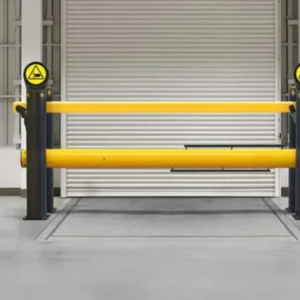
The keeper plate is the component that actually decides how reliably a facility can restrain the range of trailers that show up at its docks. DockStar’s Dual Barrier Vehicle Restraint uses adjustable, interchangeable barrier hooks — functioning as the keeper plate — designed to accommodate a wider range of RIG heights and styles than a fixed hook, plus a dual-track design that spreads restraining force across the system.
Related Terms
Rear Impact Guard (RIG)
FAQs
What’s the difference between a keeper plate and a wheel chock?
A keeper plate engages the trailer’s rear impact guard, while a wheel chock restrains the trailer at the wheel instead.
What happens if the keeper plate doesn’t engage properly?
A properly interlocked system should prevent the leveler and dock door from operating until engagement is confirmed, reducing the risk of trailer creep or premature departure.
Are keeper plates adjustable?
On some systems, yes. Adjustable or interchangeable hooks accommodate a wider range of RIG heights and styles than a fixed hook.
Do all trailers have a RIG compatible with keeper plates?
No. Damaged, missing, or non-standard rear impact guards may require a wheel-based restraint instead.
How is keeper plate engagement confirmed?
Most modern systems use a sensor or interlock tied into the restraint’s control panel or indicator lights.

Check out some of our recent projects!
Real Projects. Real Customers. Real Solutions.
DockStar Industrial coordinated a large commercial wire mesh storage locker project, including delivery follow-up, supplier coordination, installation planning, site visit support, and final project details for approximately 100 storage lockers.
Read MoreDockStar Industrial supplied and installed a railcar dock seal for an industrial loading door, helping improve weather protection, reduce air and debris intrusion, and support railcar loading operations.
Read MoreDockStar Industrial supplied wire security storage lockers for a new apartment building in Mineola, Long Island. The project included 4' x 4' x 7'-6" tenant storage lockers designed for secure resident storage, bike storage, and efficient storage room organization.
Read More