














Just in Time Inventory (JIT)
Definition
Just-in-time (JIT) is an inventory and production strategy in which materials, components, and finished goods arrive at a facility only as they are needed, rather than being ordered in bulk and held in storage. The goal is to keep as little inventory on hand as possible while still meeting production or fulfillment demand, which shifts a facility’s cost burden away from warehousing and onto precise, reliable delivery timing.

What Does Just-in-Time Mean?
Under a traditional inventory model, a plant or distribution center orders large quantities of material in advance and draws from that stock as production requires it. Just-in-time reverses the logic: production demand pulls material in, and suppliers deliver in smaller, more frequent shipments timed to the point of use.
The approach originated with Toyota’s production system in post-war Japan and spread through American manufacturing during the 1980s. Today it appears well beyond the plant floor, shaping how retailers, food distributors, and e-commerce fulfillment operations schedule inbound freight.
The trade-off is straightforward. Carrying less inventory frees up capital and floor space, but it removes the buffer that protects a facility when a supplier is late, a carrier misses an appointment, or a dock position goes down.
Key Characteristics
- Demand-pull replenishment — material is ordered in response to actual production or order volume, not a long-range forecast
- Smaller, more frequent deliveries — inbound freight arrives in more shipments of lower volume, increasing dock traffic
- Minimal safety stock — storage space is reduced or repurposed, since little material is held in reserve
- Tight supplier coordination — delivery windows, appointment scheduling, and advance shipping notices become critical rather than administrative
- Low tolerance for delay — a missed inbound delivery can idle a production line within hours
Just-in-Time vs. Just-in-Case
Just in time inventory is the opposite strategy: a facility deliberately holds buffer stock to absorb supply disruptions, demand spikes, and lead-time variability. It costs more in storage, handling, and tied-up capital, but it keeps operations running when the supply chain stumbles.
Many operations now run a hybrid of the two, applying just-in-time to predictable, locally sourced items while holding safety stock on long-lead-time or single-source components. The pandemic-era supply disruptions of the early 2020s pushed a number of manufacturers to re-examine how far they had pushed inventory reduction.
Why Just-in-Time Matters at the Dock
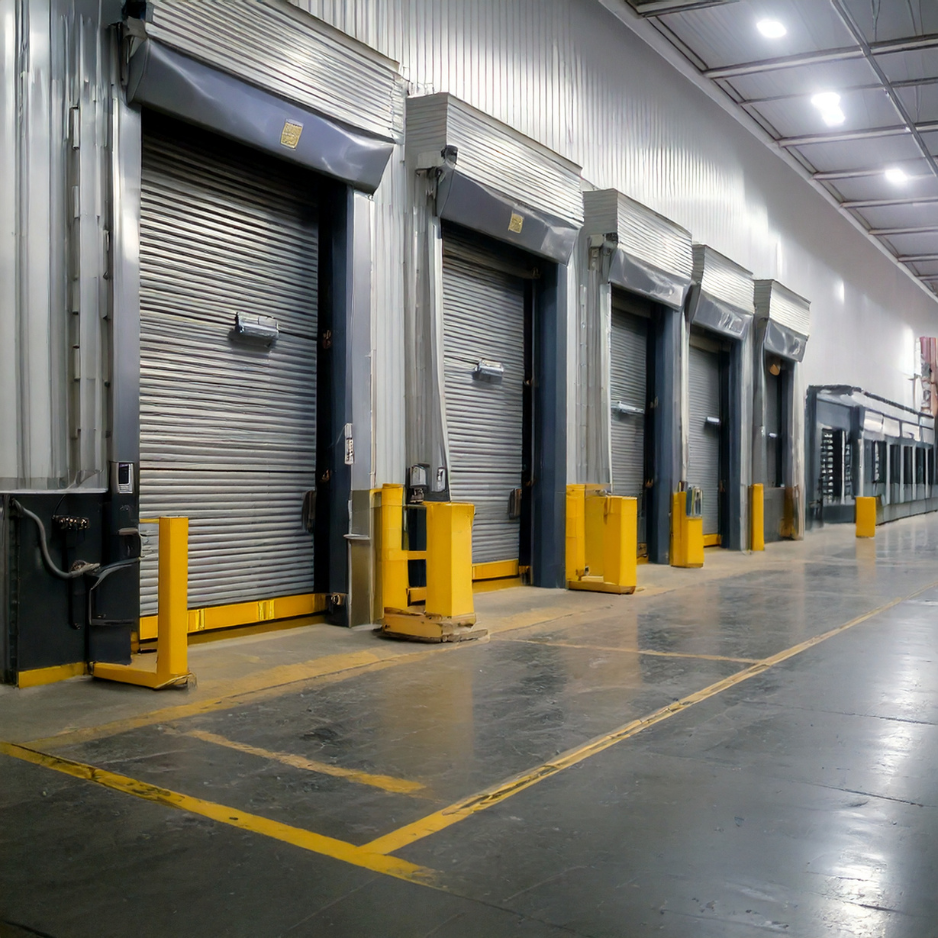
Just-in-time moves the pressure point from the warehouse rack to the loading dock. When there is no safety stock behind it, every inbound trailer matters, and the dock becomes the constraint on whether production runs on schedule.
Facilities operating under JIT typically see more truck arrivals per day, shorter unloading windows, and less room for equipment downtime. A dock leveler out of service or a restraint that fails to engage stops more than one shipment — it can stall the line. That raises the value of reliable dock equipment, disciplined appointment scheduling, and preventive maintenance, and it makes dwell time a metric worth tracking closely rather than an afterthought.
Related Terms
FAQs
What is the main goal of just-in-time inventory?
To reduce the cost and space tied up in holding stock by having materials arrive only when they are needed. The savings come from lower carrying costs, less storage square footage, and capital that is not sitting on a shelf.
What is the difference between just-in-time and lean manufacturing?
Just-in-time is one component of lean manufacturing, not a synonym for it. Lean is the broader philosophy of eliminating waste across an entire operation; JIT is the specific inventory and delivery practice that supports it.
What are the risks of just-in-time inventory?
With little or no buffer stock, a late supplier, a weather event, a carrier shortage, or a port delay can halt production quickly. JIT also depends on accurate demand forecasting, so a sudden spike in orders can leave a facility unable to respond.
How does just-in-time affect loading dock operations?
It usually means more inbound trucks per day, each carrying less freight, with tighter delivery windows. Dock scheduling, equipment uptime, and unload speed all become more important, since there is no stored inventory to fall back on if a shipment is delayed.
Is just-in-time only used in manufacturing?
No. Retailers, grocery distributors, restaurant suppliers, and e-commerce fulfillment operations all use just-in-time principles to limit how much inventory they hold, though the tolerance for delay varies by industry.

Check out some of our recent projects!
Real Projects. Real Customers. Real Solutions.
DockStar Industrial coordinated a large commercial wire mesh storage locker project, including delivery follow-up, supplier coordination, installation planning, site visit support, and final project details for approximately 100 storage lockers.
Read MoreDockStar Industrial supplied and installed a railcar dock seal for an industrial loading door, helping improve weather protection, reduce air and debris intrusion, and support railcar loading operations.
Read MoreDockStar Industrial supplied wire security storage lockers for a new apartment building in Mineola, Long Island. The project included 4' x 4' x 7'-6" tenant storage lockers designed for secure resident storage, bike storage, and efficient storage room organization.
Read More