













Jidoka
Definition
Jidoka is a lean manufacturing principle in which equipment is designed to detect an abnormal condition and stop itself automatically, rather than continuing to produce defective output. It is often translated as automation with a human touch, or autonomation. Alongside just-in-time, it forms one of the two pillars of the Toyota Production System.
What Does Jidoka Mean?
The idea traces back to an automatic loom developed by Sakichi Toyoda that stopped whenever a thread broke. Before that, a single operator had to watch each machine continuously to catch a fault. Once the machine could detect its own problem and halt, one person could oversee many machines, and defective cloth stopped being produced the moment something went wrong.
The principle generalizes well beyond looms. Any process where a fault can be detected and the process halted immediately is applying jidoka. The point is not the stopping itself but what the stop forces: an immediate investigation into the root cause, while the evidence is still present.
The Four Steps of Jidoka
- Detect the abnormality — by sensor, by inspection, or by an operator noticing something wrong
- Stop — halt the process so the defect does not propagate downstream
- Fix or correct the immediate condition — restore normal operation so work can resume
- Investigate the root cause and countermeasure it — so the same abnormality does not recur
Jidoka vs. Just-in-Time
The two pillars address different problems. Just-in-time governs flow — making sure the right material arrives at the right place at the right moment. Jidoka governs quality — making sure that when something goes wrong, it stops rather than moving downstream.
They depend on each other. A just-in-time operation carries almost no buffer stock, so a defect that slips through has nothing to hide behind and quickly reaches the customer. Jidoka is what makes running lean on inventory survivable.
Why Jidoka Matters at the Dock
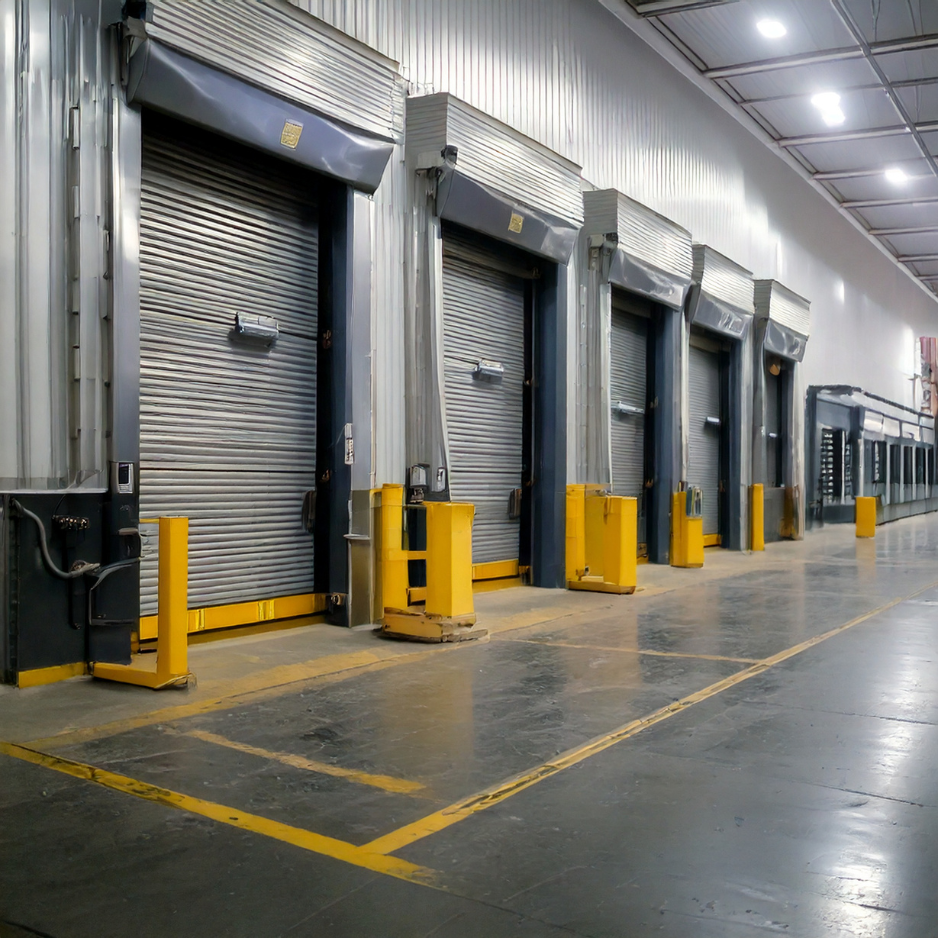
Applied to receiving and shipping, jidoka means catching a problem at the dock rather than letting it move into inventory or onto a customer’s truck. A damaged pallet identified during unloading, a count discrepancy flagged before putaway, or a mislabeled shipment stopped at the door all cost far less to resolve at the dock than three steps later.
The equipment side follows the same logic. Interlocks that prevent a dock leveler from operating when a restraint is not engaged, and communication lights that stop a driver from pulling away mid-load, are jidoka in physical form: the system halts itself instead of relying on someone to notice.
Related Terms
Andon
Poka-Yoke
FAQs
What does jidoka mean in English?
It is usually rendered as autonomation, or automation with a human touch. The idea is that a machine has enough built-in judgment to recognize a problem and stop, so a person is not required to watch it continuously.
What is the difference between jidoka and poka-yoke?
Poka-yoke is error-proofing: designing a process so a mistake cannot be made in the first place, such as a fixture that only accepts a part in the correct orientation. Jidoka is the broader principle of detecting an abnormality and stopping. Poka-yoke devices are frequently how jidoka gets implemented.
Does jidoka mean stopping the whole production line?
Not necessarily. It means stopping the affected process. Many operations use an andon system where a worker signals a problem and the line stops at a fixed point rather than instantly, giving a supervisor a short window to resolve the issue first.
Can jidoka apply outside manufacturing?
Yes. Warehousing, distribution, and service operations apply the same principle whenever a process is designed to halt on a detected error rather than pass the problem downstream. Scan verification that blocks a putaway to the wrong location is one common example.

Check out some of our recent projects!
Real Projects. Real Customers. Real Solutions.
DockStar Industrial coordinated a large commercial wire mesh storage locker project, including delivery follow-up, supplier coordination, installation planning, site visit support, and final project details for approximately 100 storage lockers.
Read MoreDockStar Industrial supplied and installed a railcar dock seal for an industrial loading door, helping improve weather protection, reduce air and debris intrusion, and support railcar loading operations.
Read MoreDockStar Industrial supplied wire security storage lockers for a new apartment building in Mineola, Long Island. The project included 4' x 4' x 7'-6" tenant storage lockers designed for secure resident storage, bike storage, and efficient storage room organization.
Read More