














How Long Should a Dock Shelter Last?
Dock shelters typically last around three to five years, but their actual lifespan depends heavily on dock traffic, trailer consistency, driver approach, and how often trucks back in off-center. Rigid shelters are especially vulnerable to torn curtains, missing head curtains, exposed fiberglass, broken stiffeners, drooping sections, and frames pulling away from the wall. A shelter may still be attached to the building while no longer sealing the trailer effectively. Regular inspections can help identify damage early, but facilities should also determine why the shelter failed before replacing it so the same problems are not repeated.
The Longevity of Dock Shelters
How Long Should a Dock Shelter Last?
Dock shelters are often one of the most neglected pieces of equipment around a warehouse.
They are used every day, but many facilities do not pay much attention to them until the curtains are hanging off, the head curtain is missing, the fiberglass is exposed, or the frame begins pulling away from the wall.
Ideally, a dock shelter may last around three to five years. Some companies would like to get more life than that, and in lighter-use applications they sometimes can.
However, the actual life of a dock shelter depends heavily on how the loading dock is used.
Dock Traffic Makes a Big Difference
A shelter at a lower-volume dock may last much longer than one at a busy distribution center.
If the same experienced drivers use the dock, the driveway approach is straight, and the trailer sizes are consistent, the shelter may see relatively controlled contact.
On the other hand, a dock receiving frequent deliveries from different carriers may experience much more wear. Different drivers approach the dock differently, trailers may vary in size, and off-center back-ins may happen more often.
Over time, that repeated contact can quickly shorten the life of the shelter.

Off-Center Back-Ins Cause Most of the Visible Damage
Rigid dock shelters are especially vulnerable to off-center trucks.
These shelters are normally built with wooden frames, fabric curtains, and fiberglass stiffeners. The fiberglass helps hold the curtains in position while allowing some flex, but the overall frame is still rigid.
When a truck comes in off-center, it may strike the side frame, pull on the curtain, damage the header, or break the fiberglass stays.
One bad move can cause major damage. More often, though, the shelter is slowly worn down by repeated contact.
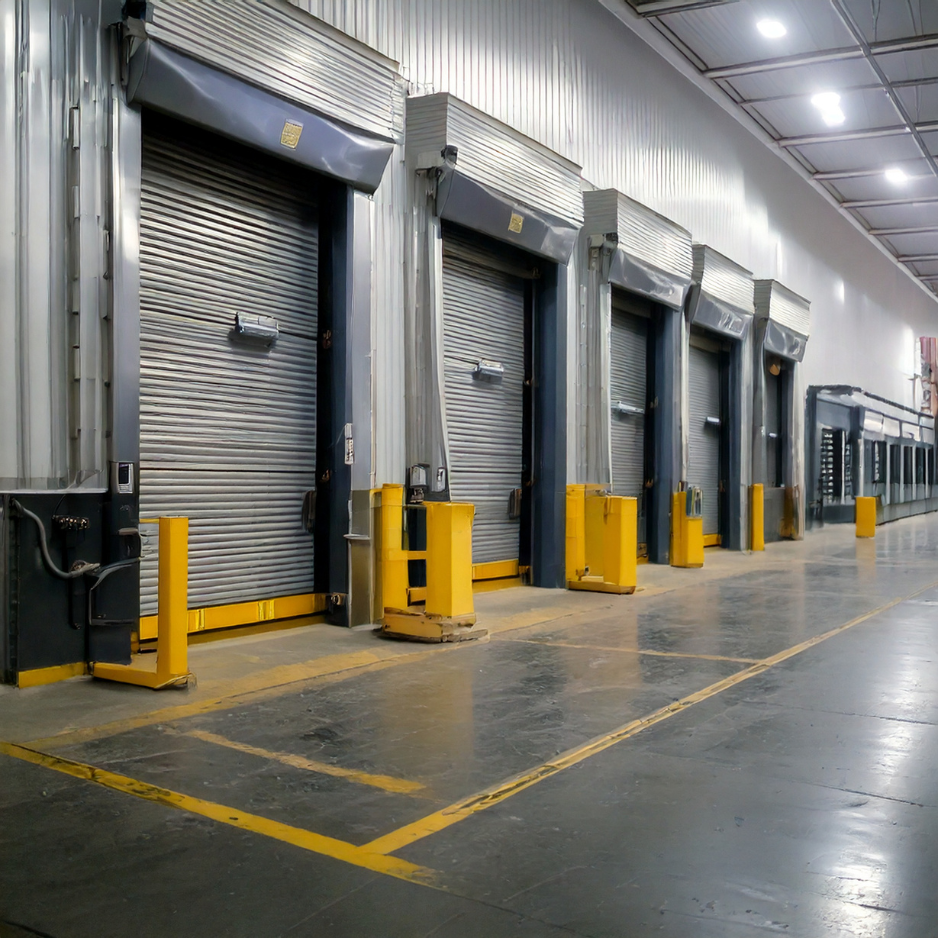
This can be seen in the photos of docks 15, 16, 17, and 18.
At dock 15, the head curtain is missing. At dock 16, the fiberglass stays are broken and exposed, while parts of the side frame are beginning to tear away.
Dock 17 is also missing the head curtain, and the fiberglass stiffeners are gone or breaking. At dock 18, the yellow side framing is visibly peeling away, and the curtains have a droopy appearance.
That drooping is an important warning sign. It usually means the internal stiffeners are no longer holding the curtains in the correct position.


A Shelter Can Still Be Hanging but No Longer Working
One of the most common problems is that damaged shelters remain in service for too long.
As long as trucks can still back into the dock, the shelter may be ignored. Meanwhile, the curtains continue tearing, the fiberglass continues falling out, and the head curtain may remain missing.
The product is technically still attached to the building, but it may no longer be sealing the trailer properly.
A damaged header can leave a large gap above the trailer. Broken side frames can stop the curtains from making consistent contact. Missing stiffeners can leave the side curtains hanging loosely instead of swiping along the trailer.
Eventually, the shelter reaches the point where it must be removed. Some of the photos show old shelter frames and curtains piled to the side of the building after they were taken down.
Signs a Dock Shelter Is Near the End of Its Life
A shelter does not need to be completely detached from the building before someone takes action.
Common warning signs include:
- Missing head curtains
- Torn side curtains
- Exposed fiberglass
- Broken or missing stiffeners
- Drooping curtains
- Damaged headers
- Side frames pulling away from the wall
- Repeated trailer contact around the steel protectors
When several of these problems appear at the same time, the shelter may no longer be worth repairing.
Maintenance Is Only Part of the Answer
Regular inspection can help catch damage early, but maintenance cannot completely prevent problems caused by repeated off-center trucks.
A facility can repair torn curtains or replace smaller components, but if the same rigid frame keeps getting hit, the same damage may continue.
That is why shelter life should be judged based on the operation, not only on the age of the product.
A three-year-old shelter at a high-volume dock may be more damaged than a much older shelter at a lightly used location.