














Job Hazard Analysis (JHA)
Definition
A job hazard analysis (JHA) is a structured safety exercise that breaks a specific task into its individual steps, identifies the hazards present at each step, and determines the controls needed to eliminate or reduce those hazards. It focuses on the relationship between the worker, the task, the tools, and the work environment rather than on the facility as a whole.
What Does Job Hazard Analysis Mean?
The premise is that most incidents trace back to a specific step in a specific task, not to a vague failure of safety culture. By documenting a task step by step, a supervisor can see exactly where a pinch point, a fall exposure, or a moving-equipment conflict occurs, then decide what to change.
Job hazard analysis and job safety analysis (JSA) describe the same process. Some organizations also use the terms task hazard analysis or activity hazard analysis. OSHA publishes guidance on the practice, though it is not a standalone regulatory requirement in the way that lockout/tagout or fall protection standards are.
How a JHA Works
- Select the task — usually one with an incident history, a high injury rate, or a recent process change
- Break it into steps — each step described as an action, typically five to fifteen steps for a single task
- Identify hazards at each step — struck-by, caught-between, fall, chemical exposure, ergonomic strain
- Determine controls — applying the hierarchy of controls, which favors elimination and engineering controls over PPE and procedure
- Review and revise — after an incident, an equipment change, or a shift in how the task is performed
Why Job Hazard Analysis Matters at the Dock
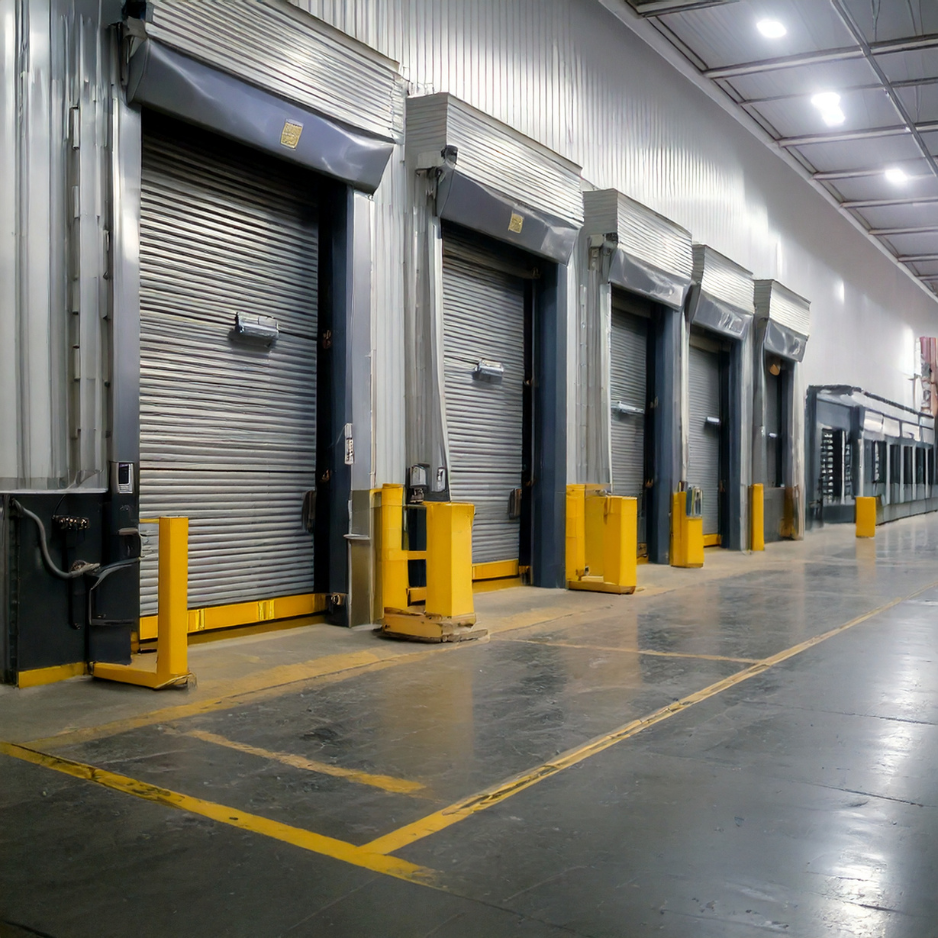
The loading dock concentrates several hazard categories in a small footprint: forklifts and pedestrians sharing space, trailers that can move or creep during loading, elevated dock edges, and manual handling of freight. A JHA on a routine dock task often surfaces exposures that had gone unexamined because the task felt familiar.
The analysis also tends to point toward engineering controls rather than procedure alone. A trailer-movement hazard identified during a JHA is better addressed by a vehicle restraint and communication light system than by another line in a training manual, since equipment does not depend on someone remembering a rule under time pressure.
Related Terms
Hierarchy of Controls
Job Safety Analysis (JSA)
FAQs
What is the difference between a JHA and a JSA?
There is no practical difference. Job hazard analysis and job safety analysis describe the same step-by-step process, and organizations simply differ in which name they use. Some prefer JHA because it puts the emphasis on identifying hazards rather than on safety as an abstract goal.
Is a job hazard analysis required by OSHA?
OSHA publishes guidance recommending job hazard analysis and treats it as a best practice, but it is not a standalone standard with its own citation. That said, several specific standards require hazard assessments, and a documented JHA is often what demonstrates compliance with those.
Who should perform a job hazard analysis?
Most effective JHAs are done by a supervisor working alongside the employees who actually perform the task. Workers know the shortcuts, workarounds, and irregular conditions that never appear in a written procedure, and those are frequently where the real hazard lives.
How often should a JHA be reviewed?
Review after any incident or near miss involving the task, whenever equipment or the process changes, and on a set schedule otherwise. Annual review is common, though high-hazard tasks often warrant a shorter cycle.

Check out some of our recent projects!
Real Projects. Real Customers. Real Solutions.
DockStar Industrial coordinated a large commercial wire mesh storage locker project, including delivery follow-up, supplier coordination, installation planning, site visit support, and final project details for approximately 100 storage lockers.
Read MoreDockStar Industrial supplied and installed a railcar dock seal for an industrial loading door, helping improve weather protection, reduce air and debris intrusion, and support railcar loading operations.
Read MoreDockStar Industrial supplied wire security storage lockers for a new apartment building in Mineola, Long Island. The project included 4' x 4' x 7'-6" tenant storage lockers designed for secure resident storage, bike storage, and efficient storage room organization.
Read More