














Why Dock Leveler Slope Matters for AGVs and Automated Forklifts
Automated Loading Is Coming. The Dock Usually Isn’t Ready.
Plenty of facilities are deep into conversations about AGVs, AMRs, and automated forklifts. Some are already running them. Others are budgeting for equipment that’s still a year or two out.
What’s missing from most of those conversations? The dock leveler.
Automation doesn’t start with the robot. It starts with the environment the robot has to operate in. The dock leveler is where that environment either holds up or falls apart — and it’s one of the last things most facilities think about.

Why Dock Leveler Slope Actually Matters
When a trailer parks at your dock, it almost never sits at exactly the same height as your dock floor. The leveler bridges that gap. The angle it creates — the slope — depends on the height difference and the length of the leveler. Longer levelers flatten the angle. Shorter ones get steep fast.
As companies explore the potential of automated forklifts, it’s clear that understanding their environment becomes crucial.
For a human operator, a rough transition is annoying. For automated equipment, it can become a repeatability problem.
Automated forklifts rely on precise dock conditions for optimal performance.
Slope affects:
Understanding the needs of automated forklifts can enhance operational efficiency.
For automated forklifts, the right slope matters just as much as for human operators.
Automated forklifts require minimal slope for efficient loading and unloading.
- Fork angle entering the trailer
- Equipment stability mid-crossing
- Load and pallet shift during approach
- Wheel impact at transition points
- What cameras and sensors see as the machine moves through the approach
- Whether travel paths stay consistent run after run
Human Operators Adjust. Automated Systems Can’t.
An experienced operator feels the dock and compensates — adjusting speed, angle, and entry point without thinking about it. Automated systems don’t work that way.
They depend on:
- Programmed travel paths and waypoints
- Camera-based pallet detection
- Sensors for positioning and obstacle awareness
- Repeatable stopping and fork insertion points
When the leveler creates an inconsistent slope or rough trailer entry, those systems have to work harder to compensate. Sometimes they can’t — not without affecting positioning accuracy, efficiency, or load integrity.
The leveler matters more when there’s less human judgment in the cab.
The Camera Problem Nobody Addresses Early Enough
Here’s a practical issue worth understanding before you invest in automation: what will the camera actually see at your dock?
Automated forklifts use cameras and sensors to identify pallets, locate pallet pockets, and determine load position. That detection happens as the machine crosses the leveler and enters the trailer. If the approach angle is steep or inconsistent, the camera’s line of sight shifts mid-crossing — which can affect pallet detection and fork alignment, especially when loads are positioned close to the rear doors.
Automated forklifts depend heavily on accurate slope conditions to function properly.
Not every system hits this problem. But it’s a solid reason to evaluate dock geometry before purchasing automation equipment, not after.
Standard Levelers Work Fine — Until They Don’t
Most standard dock levelers do their job. They were just designed for human-operated equipment, and there’s a meaningful difference between “good enough for a forklift operator” and “consistent enough for an automated system.”
Worth taking a harder look at:
- Excessive slope from a leveler that’s too short for your trailer height range
- Rough lip entry that creates a jolt every crossing
- Worn or uneven lip contact causing gaps at the trailer interface
- Pit dimensions that limit configuration options
- Limited flexibility to adapt as equipment requirements change
These aren’t always dealbreakers for traditional forklifts. For a dock you’re planning to automate, they’re worth fixing first.
For seamless operations, automated forklifts need a well-designed dock leveler.
Automated forklifts can face challenges in poorly sloped environments.
How the Tri-Pivot Dock Leveler Can Help
The use of automated forklifts is revolutionizing warehouse operations.

DockStar’s Tri-Pivot Dock Leveler takes a different approach to the dock-to-trailer transition. A unique secondary pivot creates a loading platform up to 48 inches — distributing the transition across a larger surface area for a smoother, less abrupt crossing.
It’s designed to handle variable trailer heights, which is the reality at most facilities. It also offers configurable and retrofit-ready options, so in many cases it can be adapted to existing dock pits without a full reconstruction.
A few things worth noting:
- The lay-flat lip helps create a smoother, more stable interface with the trailer bed
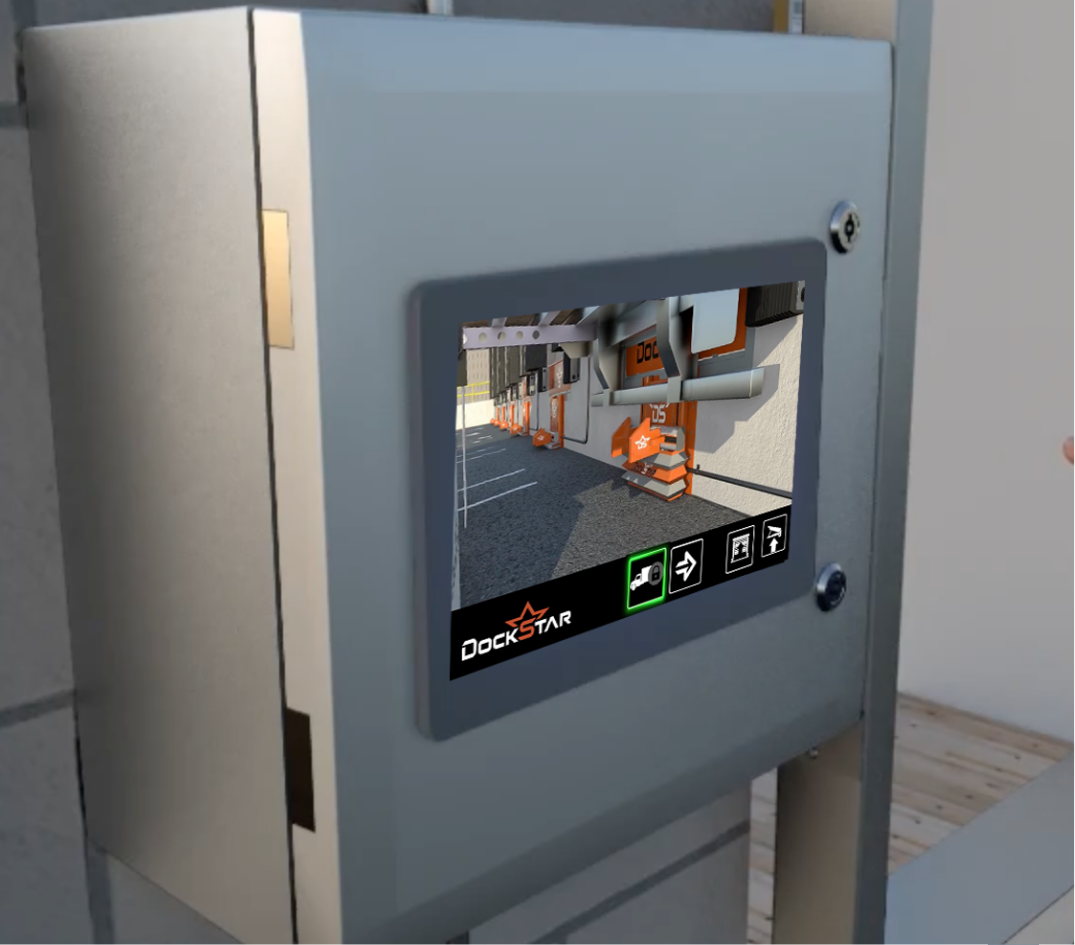
- Touchscreen controls, safe operation sequencing, and interlock indicators support more controlled dock operations
- Custom sizing, lip configuration, and geometry adjustments can be tailored to your specific site conditions
The Tri-Pivot isn’t a guarantee of AGV compatibility — DockStar doesn’t claim that. Every dock is different. But it can be a meaningful part of a dock readiness evaluation for facilities thinking about automation.
Don’t Forget the Rest of the Dock
The leveler is one piece. A few other components belong in this conversation:
Vehicle restraints — Trailer creep is a nuisance for human operators. For an automated system working inside an unsecured trailer, it can mean a dropped load or worse.
Loading dock safety lights — Human operators can ask if it’s safe to enter. Automated systems need reliable visual and electronic status signals built into the dock sequence.
Controls and interlocks — The Tri-Pivot’s safe operation sequence helps ensure the leveler, restraint, and dock door operate in the right order. That kind of structured sequencing is exactly what automation planning requires.

Questions to Ask Before You Invest in Automation
Walk your dock doors before signing any contracts. These questions are a good place to start:
- Are your current levelers creating more slope than necessary?
- Do forklifts take a noticeable jolt when entering trailers?
- How well do your levelers handle trailer height variation?
- Would a camera have a clear sightline to pallets at your dock?
- Are vehicle restraints in place at the doors you’re planning to automate?
- When were your levelers last evaluated — and were they configured for your current operation?
If several answers are “I’m not sure,” that’s worth addressing before the automated equipment arrives.
Future-Ready Starts at the Dock Door
Automated forklifts and AGVs are coming to more facilities every year. But the robot only works as well as the environment it’s operating in — and the loading dock is a big part of that environment.
Dock leveler slope, lip design, trailer interface, and dock controls all affect how consistently equipment moves between your facility and the trailer. Getting those things right matters for the forklifts running today. It may matter even more for the automation you’re planning for tomorrow.
If your facility is upgrading dock equipment or working through automation planning, talk with DockStar Industrial about whether the Tri-Pivot Dock Leveler is the right fit for your loading environment.

As you prepare for automated forklifts, don’t overlook dock configurations.
The compatibility of your dock with automated forklifts is crucial for success.
Vehicle restraints work hand-in-hand with automated forklifts for safety.

As more facilities invest in automated forklifts, dock readiness becomes vital.
Automated forklifts streamline operations, but they require the right infrastructure.
Ensuring your dock can accommodate automated forklifts enhances productivity.
Automated forklifts thrive in well-maintained dock environments.
Evaluate your dock if you plan to implement automated forklifts soon.
For successful integration of automated forklifts, focus on dock efficiency.
Automated forklifts and AGVs require a thorough examination of dock practices.
Evaluate your current operations if you’re considering automated forklifts.