














Joint Filler
Definition
A joint filler is a semi-rigid material installed in the control joints of a concrete floor to support the joint edges against wheel traffic. Unlike a flexible sealant, which is meant to keep water and debris out, a joint filler is designed to carry load, so a forklift wheel crossing the joint does not chip or break down the concrete at the edge.
What Does Joint Filler Mean?
Concrete slabs are deliberately cut with control joints so that shrinkage cracking happens in a straight, planned line rather than randomly across the floor. Those joints solve one problem and create another: an unsupported vertical edge running the length of the warehouse, directly in the path of every forklift.
Hard-wheeled equipment hits that edge thousands of times a day. Without support, the corners spall — chipping away until the joint widens into a ragged trench. A semi-rigid filler placed full depth transfers the load across the gap and holds both edges in place.
Joint Filler vs. Joint Sealant
- Joint filler — semi-rigid, typically epoxy or polyurea, installed full depth to support edges under wheel load
- Joint sealant — flexible, typically silicone or urethane, installed to block water, dust, and debris while allowing movement
- Where each belongs — fillers in interior traffic-bearing control joints; sealants in expansion joints, exterior slabs, and wet or sanitary environments
- Common failure — using a flexible sealant in a traffic joint, which compresses under load and leaves the edges unsupported
Why Joint Filler Matters at the Dock
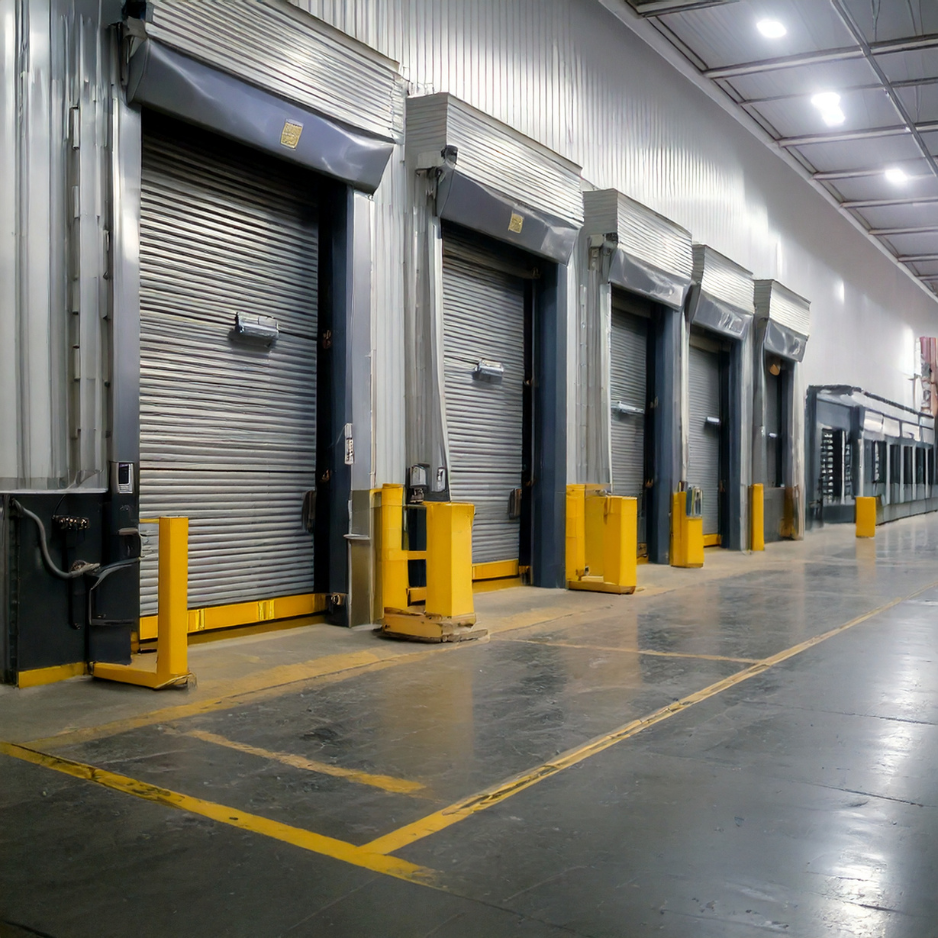
Floor joints near the dock take the heaviest and most concentrated traffic in the building. Every load coming off a trailer crosses the same few joints, often with a fully loaded forklift making a turn at the same time. Damage shows up here first.
A deteriorated joint is more than a cosmetic problem. It jolts the operator and the load, accelerates tire and equipment wear, creates a trip hazard for anyone on foot, and eventually requires slab repair that shuts down a dock position. Facilities usually let joints go too long because the deterioration is gradual and nothing dramatic marks the point where repair becomes urgent.
Most slab shrinkage occurs within the first year, which is why joints are typically filled after the concrete has had time to cure and move rather than immediately after placement.
Related Terms
Control Joint
Spalling
Floor Flatness (FF/FL)
FAQs
What is the difference between a joint filler and a joint sealant?
A filler is semi-rigid and installed to carry wheel loads across the joint, supporting the concrete edges. A sealant is flexible and installed to keep water and debris out while allowing the slab to move. Using a sealant where a filler belongs is a frequent cause of joint edge damage.
When should control joints be filled?
Common practice is to wait until the slab has completed most of its shrinkage, often several months to a year after placement, so the joint has stopped opening. Filling too early can pull the filler away from the joint walls as the concrete continues to move.
What causes joint edges to chip and break down?
Hard-wheeled traffic repeatedly striking an unsupported vertical edge. Small equipment wheels, heavy loads, and turning movements over the joint all accelerate it, and once the edge starts to break the damage widens quickly.
Can damaged joints be repaired without replacing the slab?
In most cases, yes. Spalled edges are typically saw-cut back to sound concrete, rebuilt with a repair material, and then refilled. Full slab replacement is usually only necessary where the damage has spread well beyond the joint itself.

Check out some of our recent projects!
Real Projects. Real Customers. Real Solutions.
DockStar Industrial coordinated a large commercial wire mesh storage locker project, including delivery follow-up, supplier coordination, installation planning, site visit support, and final project details for approximately 100 storage lockers.
Read MoreDockStar Industrial supplied and installed a railcar dock seal for an industrial loading door, helping improve weather protection, reduce air and debris intrusion, and support railcar loading operations.
Read MoreDockStar Industrial supplied wire security storage lockers for a new apartment building in Mineola, Long Island. The project included 4' x 4' x 7'-6" tenant storage lockers designed for secure resident storage, bike storage, and efficient storage room organization.
Read More