













Jackknife
Definition
A jackknife occurs when the trailer of a tractor-trailer swings out of alignment and folds toward the cab, forming a sharp angle at the coupling point. The name comes from the motion of a folding pocket knife. Once the trailer passes a certain angle, the driver typically cannot recover, and the vehicle continues to rotate until it stops or strikes something.
What Causes a Jackknife?
Jackknifing happens when the trailer’s momentum overcomes the traction holding it in line behind the tractor. That loss of traction usually comes from braking too hard, braking while turning, or driving on a surface that cannot support the friction the maneuver demands.
- Slippery surfaces — ice, snow, standing water, or spilled material in a yard
- Hard or improper braking — particularly braking mid-turn, which shifts weight and unloads the drive axles
- Empty or lightly loaded trailers — less weight over the trailer axles means less grip
- Tight maneuvering at low speed — backing into a dock position at a sharp approach angle
- Equipment condition — worn tires, out-of-adjustment brakes, or an unbalanced load
Jackknife vs. Trailer Swing
The two are often used interchangeably but describe different mechanics. A tractor jackknife begins when the drive wheels lose traction and the cab slides, allowing the trailer to push it sideways. A trailer swing begins at the trailer axles, with the rear of the trailer sliding out while the tractor stays in line. Both end in the same folded configuration.
Why Jackknifing Matters at the Dock
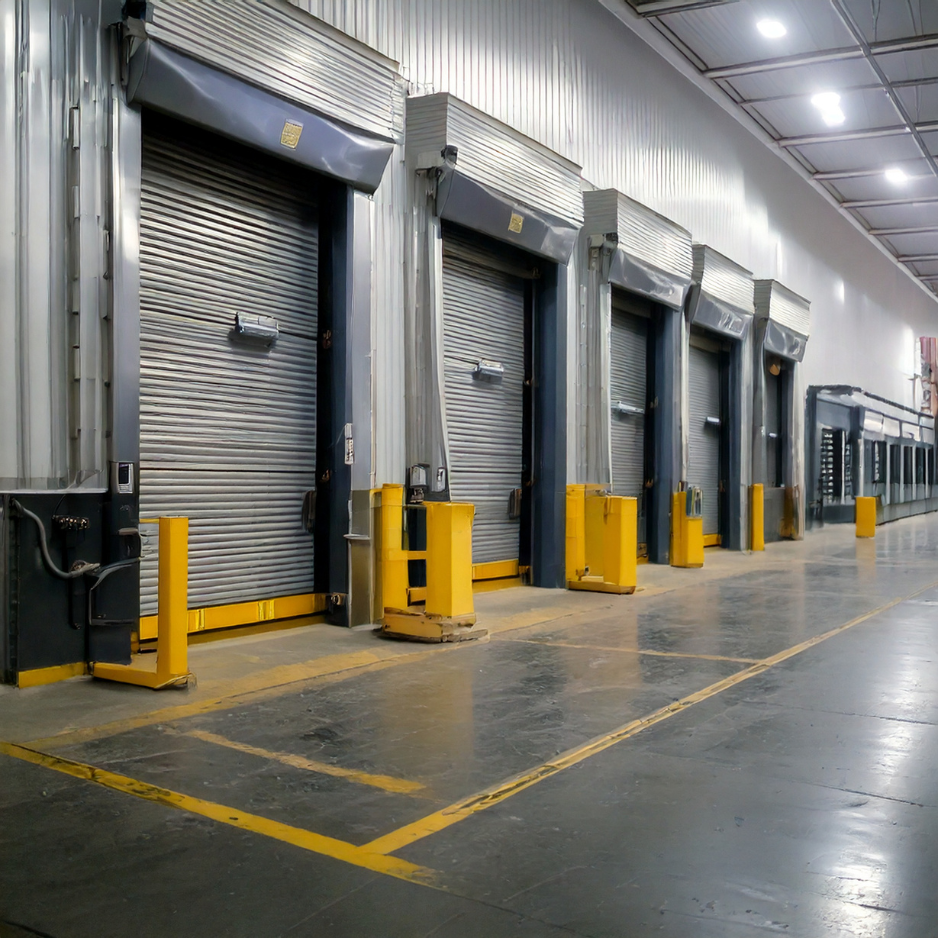
Most attention goes to highway jackknifes, but the low-speed version happens in yards and dock approaches more often than facility managers expect. A driver backing at a steep angle on a wet or icy apron can fold a trailer into an adjacent trailer, a light pole, or the building itself.
Yard design does much of the prevention work. Adequate apron depth in front of the dock, clear guide lines, controlled traffic flow, and drainage that keeps the approach free of standing water and ice all reduce the odds. Once a trailer is at the dock, the risk shifts from jackknifing to trailer creep and early departure, which is the domain of wheel chocks and vehicle restraints rather than yard layout.
Related Terms
Trailer Creep
Apron Space
Trailer Swing
FAQs
Can a jackknife happen at low speed?
Yes. Low-speed jackknifes occur regularly in yards and dock approaches, usually while backing at a sharp angle on a slick surface. They rarely injure anyone but frequently damage trailers, adjacent equipment, and the building.
Are empty trailers more likely to jackknife?
Generally yes. With little weight over the trailer axles, there is less friction available at the tires, so the trailer loses traction sooner than a loaded one would under the same braking or turning input.
Do anti-lock brakes prevent jackknifing?
ABS reduces the risk considerably by preventing wheel lockup during hard braking, which is a common trigger. It does not eliminate the risk, since jackknifes can still develop from turning inputs, poor traction, or load imbalance.
How can a facility reduce jackknife risk in its yard?
Provide enough apron depth for a straight backing approach, mark clear guide lines and traffic flow, maintain drainage so the approach does not ice or pool, and keep the surface free of debris and spilled material.

Check out some of our recent projects!
Real Projects. Real Customers. Real Solutions.
DockStar Industrial coordinated a large commercial wire mesh storage locker project, including delivery follow-up, supplier coordination, installation planning, site visit support, and final project details for approximately 100 storage lockers.
Read MoreDockStar Industrial supplied and installed a railcar dock seal for an industrial loading door, helping improve weather protection, reduce air and debris intrusion, and support railcar loading operations.
Read MoreDockStar Industrial supplied wire security storage lockers for a new apartment building in Mineola, Long Island. The project included 4' x 4' x 7'-6" tenant storage lockers designed for secure resident storage, bike storage, and efficient storage room organization.
Read More