












Guardrail (Industrial)
Definition:
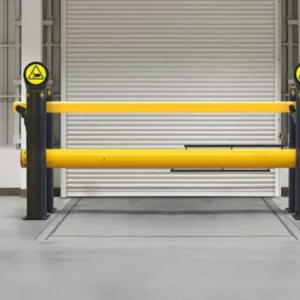
A fixed, high-visibility barrier used in warehouses, plants, and distribution centers to separate pedestrians, equipment, and building assets from powered industrial truck (PIT) traffic or fall hazards; typically constructed from anchored steel or engineered polymer rails with posts, or as a perimeter railing at elevated edges (mezzanines, platforms, pits).
What it is (and why it matters):
In practice, “guardrail” covers two common use cases:
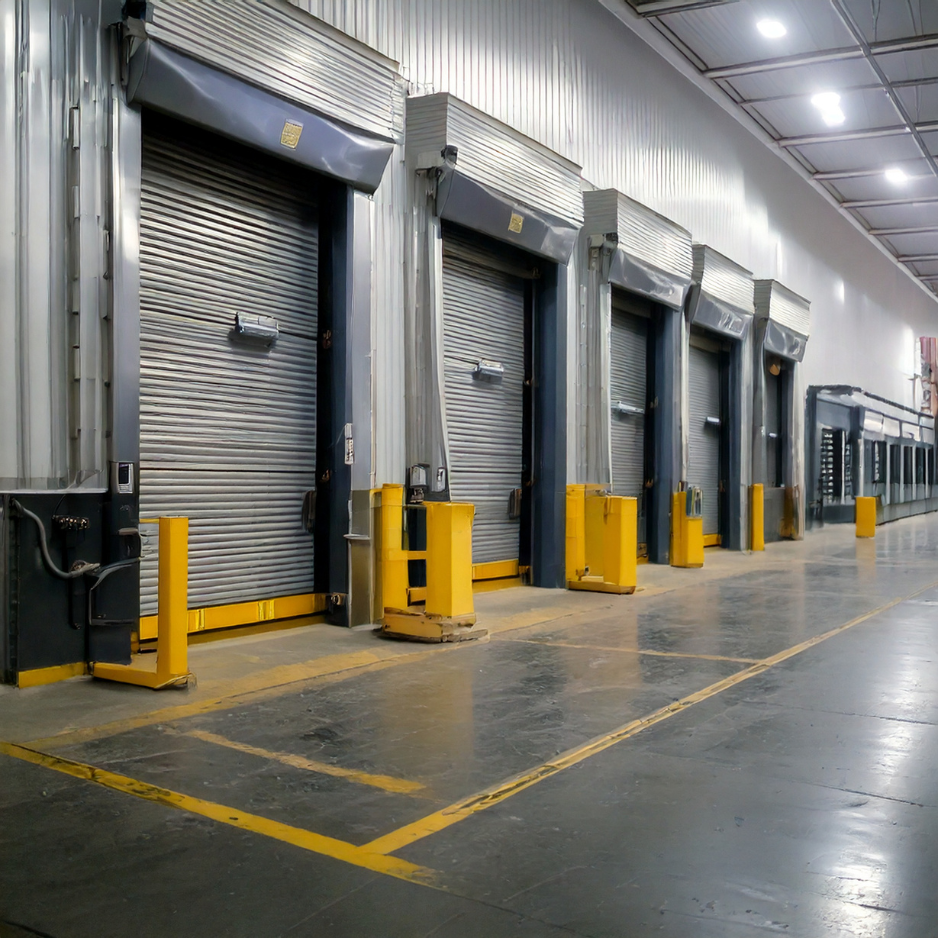
(1) Protective guarding at floor level—rails and posts that absorb forklift impacts to shield walkways, protect warehouse racks, doors, chargers, conveyors, and dock equipment; and
(2) Fall-protection guardrails at elevated edges—rails that stop people from stepping or rolling off platforms or dock edges. Good guard rail design reduces struck-by incidents, property damage, and unplanned downtime, and it communicates safe travel paths inside busy facilities.

Standards & stats that matter
- OSHA guardrail criteria (fall protection): Top edge height 42 in ± 3 in and able to withstand ≥200 lb of force applied in a downward or outward direction (plus midrails/toeboards where required). OSHA
- Forklift risk profile: Forklifts were the source of 67 U.S. work-related deaths in 2023; nonfatal injury cases requiring days away/restricted/transfer (DART) totaled 24,960 in 2021–2022. These events frequently involve pedestrians and dock areas—exactly where guard rails and clear walk paths help. Injury Facts
- Impact-rated barrier testing (protective guarding): The ANSI/MHI 31.2 test method crash-tests industrial guardrails/barriers using surrogate vehicles 9,000–20,000 lb at 3, 5, or 7 mph so buyers can compare impact ratings to their actual PIT traffic. Ask vendors for their MHI 31.2 rating when specifying barriers. Ergonomics and Safety Blog
When to use guardrails
- Along pedestrian aisles/crosswalks and around personnel doors opening into forklift lanes.
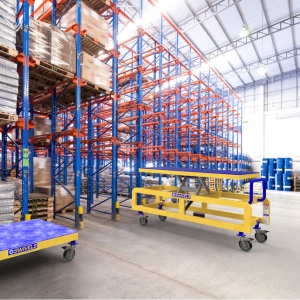
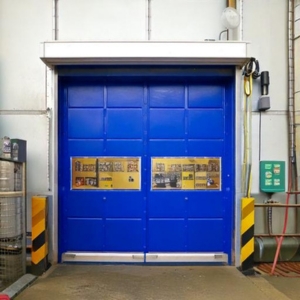
- At rack ends, battery charging, conveyors/MHE, dock doors/levelers, and control panels to prevent strike damage.
- On mezzanines, work platforms, and pits where fall protection is required.
Helpful KPIs
- PIT–pedestrian incidents and near-misses per 200k hours (OSHA recordable lens).
- Asset-damage cost/month (racks, doors, controls) and downtime minutes per incident.
- Barrier impact events/month (if posts are instrumented or logged) and zones protected (%) of traffic intersections.
- DART rate for struck-by/against cases (track pre- vs. post-installation).
FAQs
1) What’s the difference between a guardrail and a handrail?
A guard rail is a barrier to prevent impacts or falls from edges; a handrail is for grasping on stairs/ramps. OSHA’s strength/height rules apply to guardrails used for fall protection; protective-guarding rails are chosen for impact ratings.
2) How high must an elevated guardrail be in a warehouse?
OSHA requires a top rail at 42 in ± 3 in with a system capable of ≥200 lb force. Midrails, screens, or toeboards may be required depending on the edge and falling-object risk.
3) How strong should floor-level guard rails be against forklifts?
OSHA doesn’t prescribe a single impact value for floor barriers; specify products tested to ANSI/MHI 31.2 with impact ratings that match your truck weight and typical travel speed (e.g., 12,000-lb at 5 mph).
4) Where should I prioritize guardrails?
Start with pedestrian/vehicle conflict points (doorways into aisles, intersections), rack ends, dock equipment, and critical infrastructure (electrical, IT, compressors). OSHA notes many injuries occur when lifts drive off docks, fall between docks and trailers, or strike pedestrians—barriers and clear markings reduce these risks.
5) Do flexible guardrails meet OSHA?
OSHA is performance-based: if the system meets the applicable fall-protection criteria (for edges) or provides adequate impact protection (for floor guarding), the material can be steel or engineered polymer. Use MHI 31.2 test data and proper installation to document suitability.
6) Do dock edges require guardrails if trucks are present?
Where there’s a fall hazard and no trailer present, a compliant guardrail or other fall protection is required. Many sites combine vehicle restraints, communication lights, and guardrails to manage both pull-away and fall risks at docks.
Key takeaway
Guardrails are a high-ROI control for busy facilities: they physically separate people and assets from PIT traffic and provide code-compliant fall protection at edges.
Use OSHA’s 42-inch/200-lb criteria for elevated edges and choose floor-level barriers with documented ANSI/MHI 31.2 impact ratings that match your trucks and speeds.
Track incidents, near-misses, and damage costs to prove the safety and uptime gains.
