













Block Stacking
Definition:
Block Stacking (noun): A floor-storage method in which palletised or unitised loads are stacked directly on the warehouse floor in compact, rectangular blocks—without fixed racking—so that loads remain stable, secure, and quickly accessible in high-throughput environments.

What It Means in a Busy Loading-Dock Operation
In practice, block stacking is building neat, interlocking “cubes” of pallets (or totes/crates) on the floor to maximize space and speed. It’s common in inbound staging lanes near docks, for overflow during peaks, or in facilities handling uniform SKUs with fast turns. Because there’s no rack structure, performance depends on stack pattern, load quality, aisle discipline, and operator skill.
Why Teams Use It
- Speed & flexibility: Fast to set up, expand, or tear down—ideal for cross-dock or surge inventory.
- Low CapEx: No racking required; a smart option for growing operations or temporary projects.
- High density (when done right): Tight lane spacing and interlocked tiers can improve cube utilization versus scattered floor storage.
Regulatory & Safety Notes
- Follow your site’s written storage standard and local fire/safety codes; confirm sprinkler clearances and any stack-height limits with your AHJ (Authority Having Jurisdiction).
- Emphasize stable tiering (stacked, blocked, interlocked, and height-limited), housekeeping, and traffic control to reduce struck-by and falling-object risks.
How to Do Block Stacking Safely
1) Start with the load
- Use sound pallets and proper unitization (stretch-wrap/banding/corner-boards) so units won’t bulge or deform.
- Keep weight centered and level; avoid “pyramids” that reduce vertical stability.
2) Choose a stable pattern
- Interlock tiers (brick or pinwheel patterns) to distribute forces and resist lateral shift.
- Keep a consistent orientation within a stack for fork entry and safer handling.
3) Limit stack height intelligently
- Base height on load crush strength, pallet condition, and floor flatness—not just “what fits.”
- Never exceed a height that compromises stability or sprinkler clearance; follow site standards and AHJ guidance.
4) Lay out lanes for flow
- Mark lanes and keep uniform footprints; maintain minimum aisle widths for PIT (forklift/pallet jack) turning.
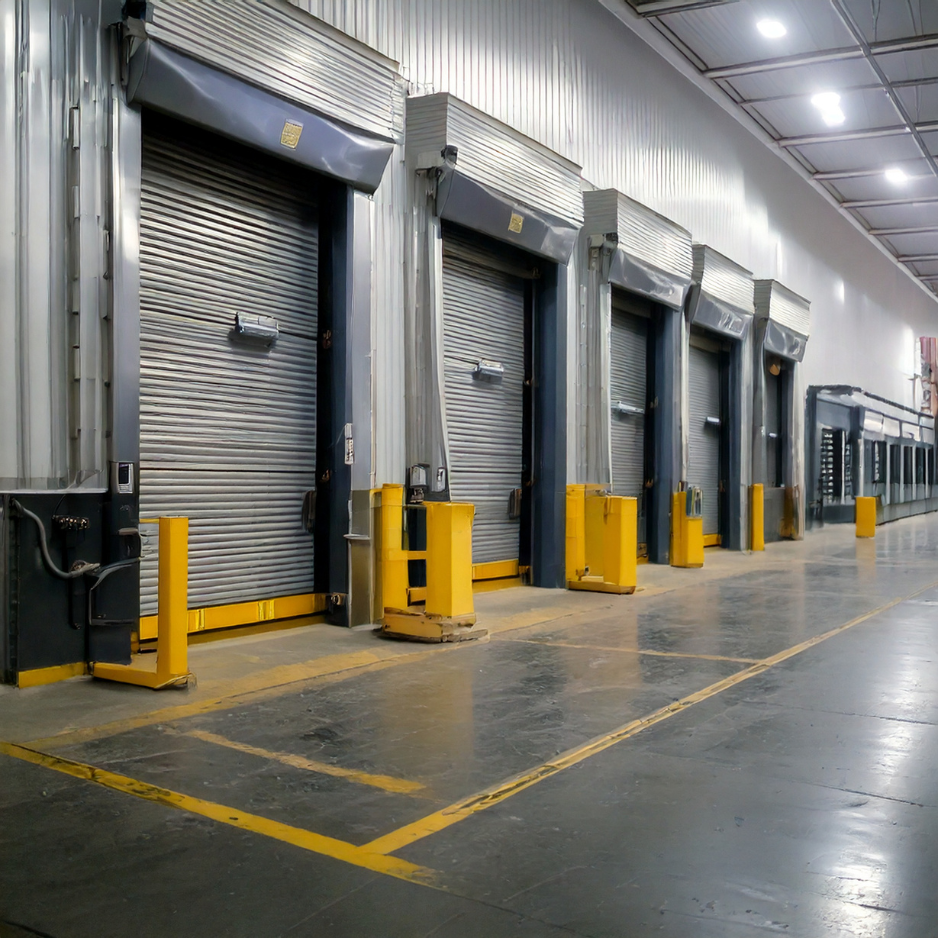
- Protect corners with guardrail or bollards in high-traffic dock aprons.
5) Enforce housekeeping & inspections
- Remove broken pallets, spilled product, and wrap tails; uneven bases cause lean and tip risk.
- Add quick visual checks to PIT pre-shift routines—look for lean, crushed cartons, or overhanging pallets.
Where Block Stacking Works Best
- Inbound/outbound staging: Short dwell times near busy docks.
- Seasonal peaks/promotions: Fast-moving, uniform SKUs.
- Overflow zones: When racks are full or for project-based storage.
KPIs That Matter
- Cube utilization (%): Floor area used by stacks ÷ total floor area of the zone.
- Damage rate (%): Damaged units ÷ total units handled (watch upper-tier crush/tilt).
- Dock-to-stock time: Minutes from receipt to stable stack/putaway—staging efficiency.
- PIT travel per pallet (ft or m): Shorter is better; optimize lane layout and pick paths.
- Safety observations per 1,000 pallets: Leading indicator for stack lean, overhang, or blocked aisles.
Quick Calculations
- Max stack count (rule-of-thumb): Allowable stack height ÷ unit load height. Round down and verify against stability and fire-protection rules before use.
- Lane capacity: (Pallets per stack × stacks per lane) × number of lanes.
FAQs
1) How high can I block-stack pallets?
There’s no single universal limit. Set a site-specific maximum based on load integrity, pallet condition, floor flatness, and sprinkler/clearance rules. Follow your written standard and local AHJ guidance.
2) Is block stacking safe for mixed-SKU or irregular loads?
It’s safest with uniform, cube-shaped loads. Mixed or irregular loads raise the risk of lean and collapse; keep mixed stacks shorter, improve unitization (wrap/band/corner-boards), or move them to selective rack.
3) What aisle width should I maintain?
Match aisle width to your powered industrial truck’s turning radius and fork length, then add clearance for load overhang and bidirectional traffic. Keep aisles consistent and free of debris.
4) How do I prevent stacks from shifting?
Use interlocking patterns, keep tiers level, avoid overhang, and replace damaged pallets. Add slip-sheets or friction mats if needed, and avoid building on uneven or cracked slabs.
5) Do operators need special training?
Yes. PIT operators should be trained on your stacking standard, maximum heights, signs of instability, and dock-lane traffic flow, including when and how to break down a leaning stack.
Key Takeaways
Block stacking is a fast, flexible, low-CapEx way to store floor-level inventory in busy dock environments—provided stacks are interlocked, height-limited, and kept in clean, well-marked lanes. Build to the load, verify stability every tier, respect fire-protection clearances, and monitor leading KPIs (cube utilization, damage rate, dock-to-stock time, and safety observations) to keep density high and risk low.
