












Ambient Storage
Ambient storage refers to storing goods at normal “room” conditions without active refrigeration or freezing. In warehouses and industrial facilities, that typically means a temperature band around 59–77°F (15–25°C) with reasonable air circulation and a controlled—but not tightly regulated—humidity level. The goal is to keep products stable, dry, and protected from temperature swings while minimizing energy use.

What qualifies as ambient storage?
- Temperature: Kept within a broad room-temperature range using standard HVAC and good building/door practices—not chillers or freezers.
- Humidity: Managed via airflow and sealing to reduce moisture intrusion; targets vary by product (many aim for roughly 40–60% RH).
- Airflow: Sufficient mixing to reduce hot/cold spots, condensation, and dust.
Typical products stored at ambient
- Dry goods and packaged CPG (paper goods, canned food, shelf-stable items)
- Many chemicals and maintenance supplies labeled for room temperature
- Building materials, hardware, and parts
- Electronics and packaged equipment not requiring strict climate control
- Non-perishable beverages (unopened) and packaging materials
Ambient vs. temperature-controlled
Choose ambient when:
- Products are shelf-stable at room conditions
- Labels/specs do not require cold chain or strict temp/RH bands
- You can protect goods from brief weather exposure at the dock with proper sealing and fast door cycles
Choose refrigerated/freezer or precise climate control when:
- Labels require specific temperature windows
- Sensitive goods are at risk from heat, cold, or moisture
- QA, GMP, or customer contracts mandate tighter tolerances and logging
Operational best practices for ambient warehouses
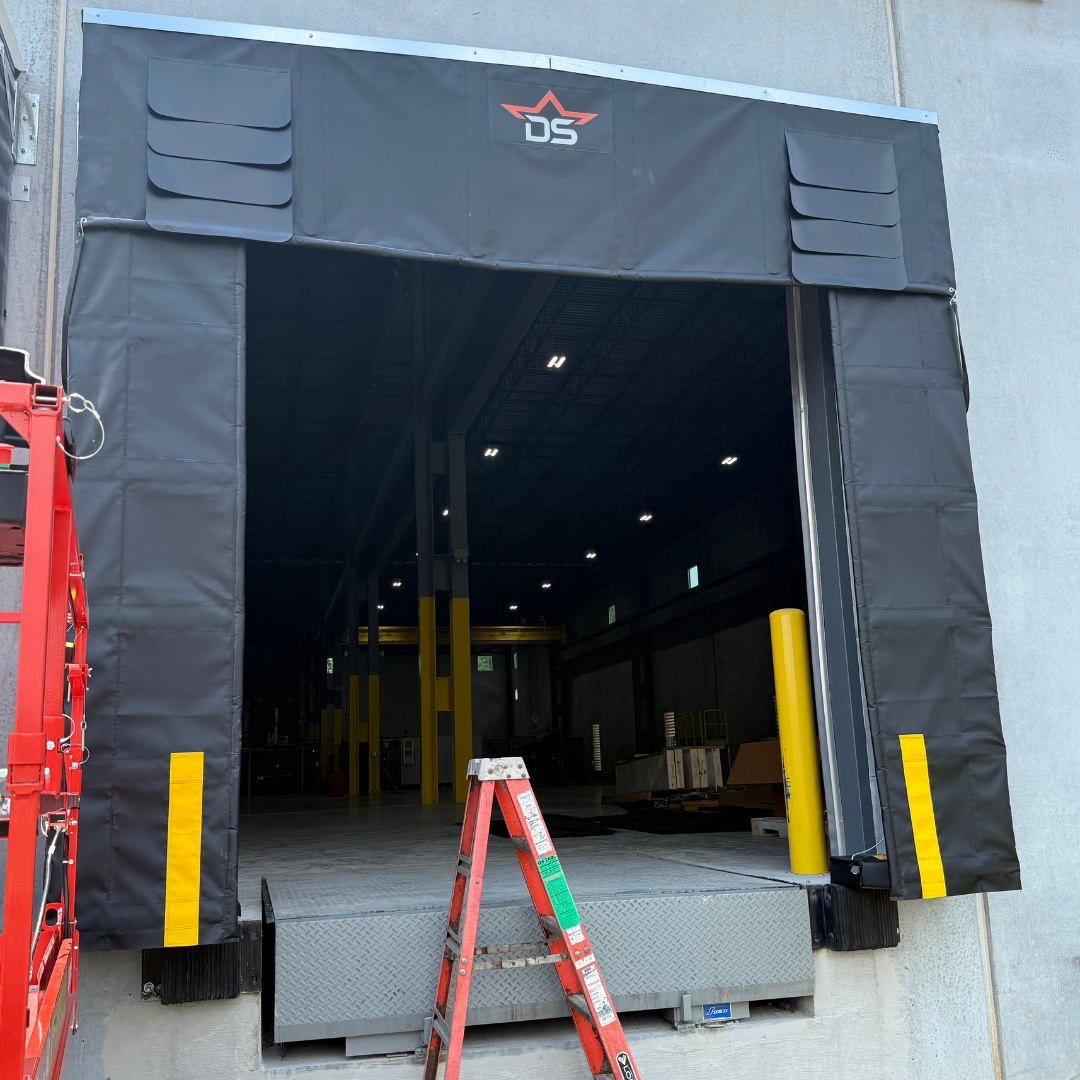
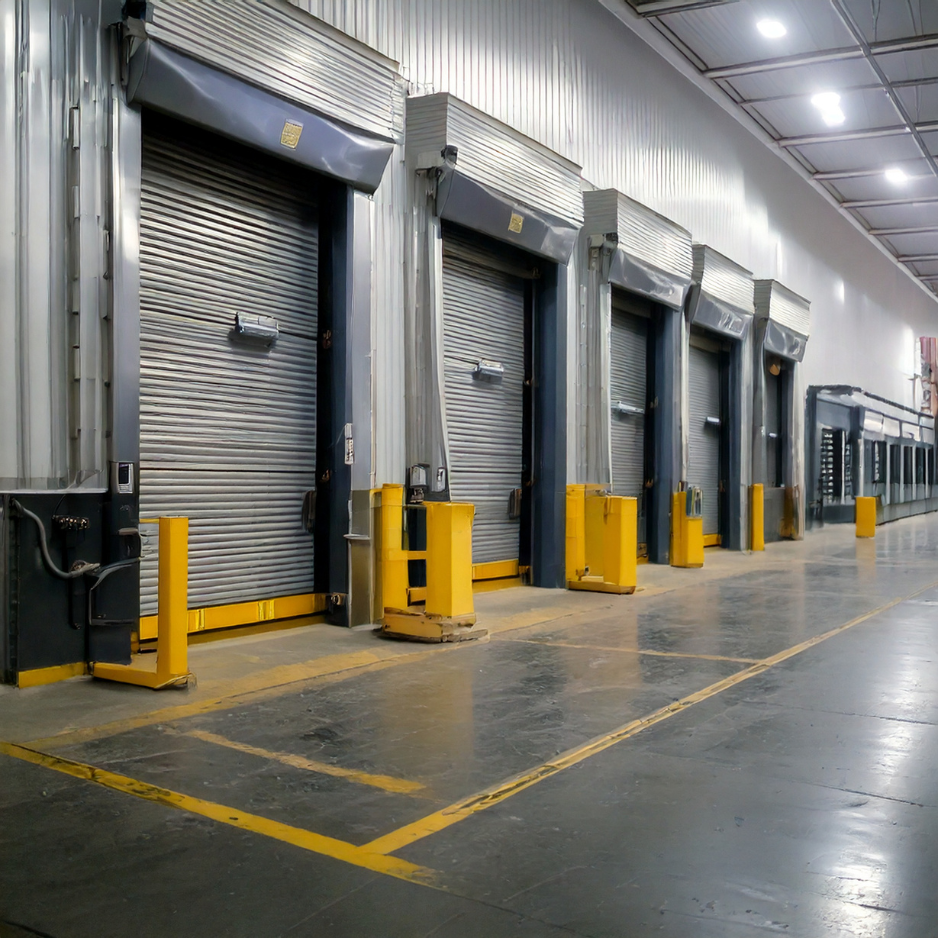
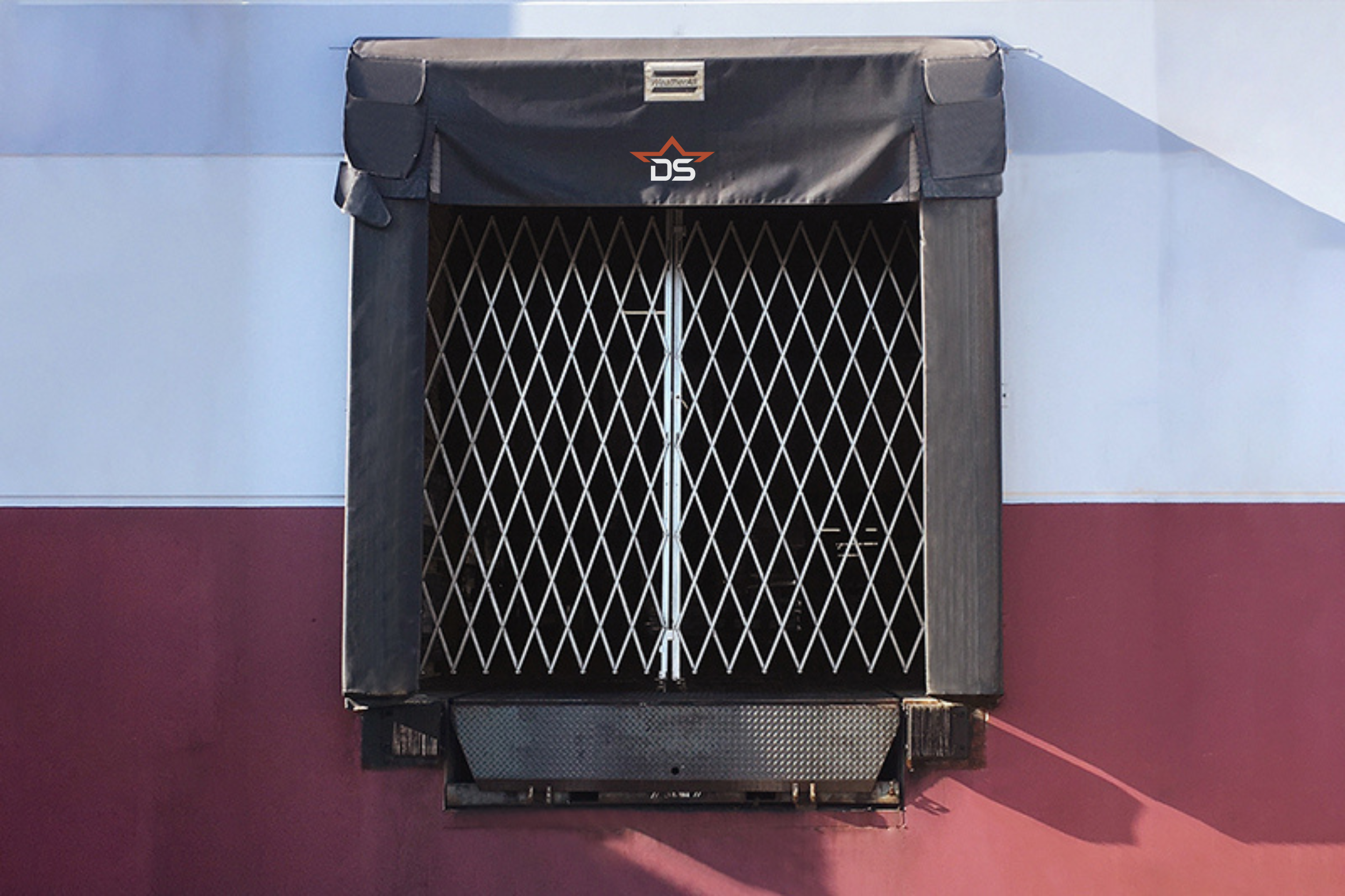
- Seal the envelope at the dock. Use dock seals & shelters to limit heat, humidity, and pests when trailers are positioned. This cuts infiltration that can spike temps and condensation.
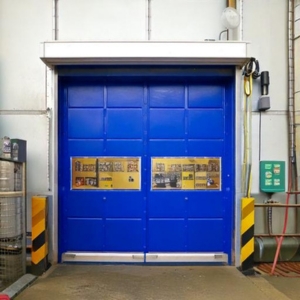
- Cycle openings quickly. Fabric high-speed doors open/close in seconds, minimizing energy loss and keeping dust and outside air out during high-traffic shifts.
- Mix the air to prevent stratification. HVLS fans move large volumes of air at low speed, helping even out temperature layers and reduce condensation on floors and packaging.
- Plan receiving/dispatch lanes. Stage ambient-tolerant goods closest to docks; move humidity-sensitive SKUs deeper into the building away from doors.
- Watch microclimates. Place temp/RH sensors near dock openings, mezzanines, and corners—spots most prone to swings.
- Control dust and debris. Maintain sweeps/brushes on doors and keep dock aprons clear to protect packaging integrity.
- Train for quick turns. Reduce dwell time of open doors and unenclosed trailers, especially in peak summer/winter.
FAQs about Ambient Storage
What temperature is “ambient” in a warehouse?
Generally room temperature—often cited around 59–77°F (15–25°C). The acceptable range depends on product specs and season.
Is ambient storage the same as temperature-controlled?
No. Ambient relies on standard building HVAC and good dock practices. Temperature-controlled means tighter, actively managed bands (e.g., chilled 35–46°F, frozen, or strictly monitored “controlled room temperature”).
What humidity level is acceptable for ambient storage?
It varies by product. Many operations aim roughly for 40–60% RH to reduce corrosion, caking, and packaging degradation. Follow manufacturer guidance.
Can food be stored at ambient?
Shelf-stable, packaged foods are often fine at ambient. Perishables and items labeled for cold chain require refrigeration or freezing.
How do I prevent heat and moisture from entering near the docks?
Use dock seals & shelters to close the gap around trailers and high-speed doors to shorten open-door time. This combination greatly reduces infiltration.
Why are HVLS fans recommended for ambient facilities?
They gently move large volumes of air, helping eliminate hot/cold spots, reduce condensation risk, and improve overall comfort—without creating damaging drafts.
What causes condensation in ambient warehouses?
Warm, humid air contacting cooler surfaces (e.g., floors near open docks or concrete in the morning). Sealing docks, reducing door-open time, and improving air mixing with HVLS fans can help.
Do I need data logging for ambient storage?
If customer contracts or quality programs require proof, yes. Many facilities log temp/RH at dock doors and critical zones to document conditions and trends.
How do seasons affect ambient storage?
Summer increases humidity/heat loads; winter can cause cold drafts and dry air. Adjust door timing, sealing, and fan speeds by season; inspect seals before peak weather.
What KPIs should I track for ambient stability?
Door open time, trailer dwell at doors, temp/RH variance by zone, number of seal failures, and energy use per pallet moved.
