



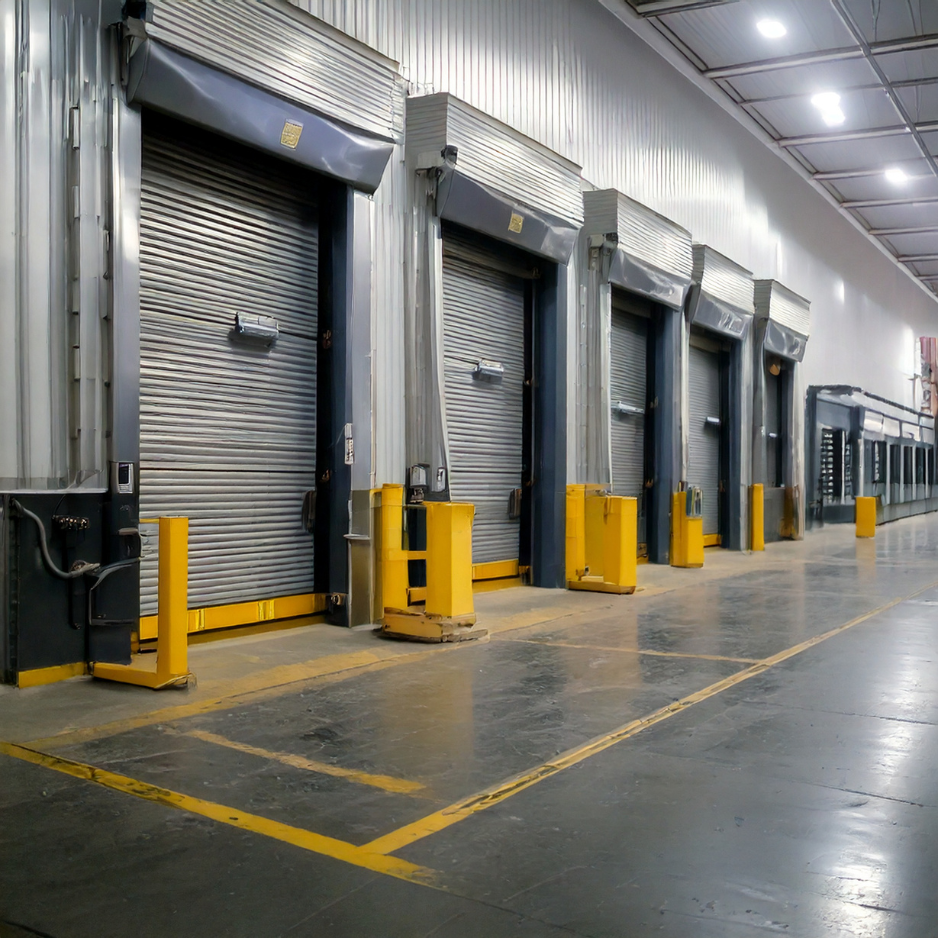










Loading Dock Door Sizes: The Short, Practical Guide
Seeking the ideal loading dock door sizes for a high-traffic operation?
This quick guide explains how to choose dock door width and height that fit modern fleets and workflows in warehouses, plants, and industrial facilities. We cover why 9′ × 10′ is the modern default, when to step up to 10′ × 10′, and how 102-inch trailers, dock seals vs. dock shelters, dock levelers, and approach slope change your usable opening.
You’ll see the trade-offs that affect forklift clearance, energy control, and loading speed—so you can spec doors once and avoid bottlenecks later.

Start with the trucks you actually serve
- Trailer width: Most modern vans/reefers are 102″ wide (8’6″).
- Bed height at dock: Typically 44″–56″; box trucks vary 28″–48″.
- If 102″ trailers are common, size for them—don’t design to the smallest truck.
The go-to sizes (and why)
- 9′ × 10′ (108″ × 120″) — Modern default
Works best for 102″ trailers. Room for seal compression and forklift mast clearance. - 10′ × 10′ (120″ × 120″) — Extra forgiveness
Choose for cold storage, tight yards, high stacks, or declined approaches. - 8′ × 9′ or 8′ × 10′ — Legacy/special cases
OK for 96″ trailers or parcel ops; can feel tight with 102″ trailers and compression seals. - 10′ × 12’+ — Specialty/drive-in
For tall equipment, odd loads, or drive-in applications.
90% answer: If you handle modern tractor-trailers, standardize on 9′ × 10′. Upgrade problem bays to 10′ × 10′.
Height matters more than you think
- Most docks sit 48″–52″ high.
- 10 ft door height gives safer mast clearance, especially with steeper levelers and taller loads.
- Declined yard (sloping down to building) raises the trailer at the header—go 10′ tall (or more).
Seals vs. shelters change your clear opening
- Compression seals shrink usable width/height. If you use them with 102″ trailers, pick 9′ or 10′ wide and 10′ tall.
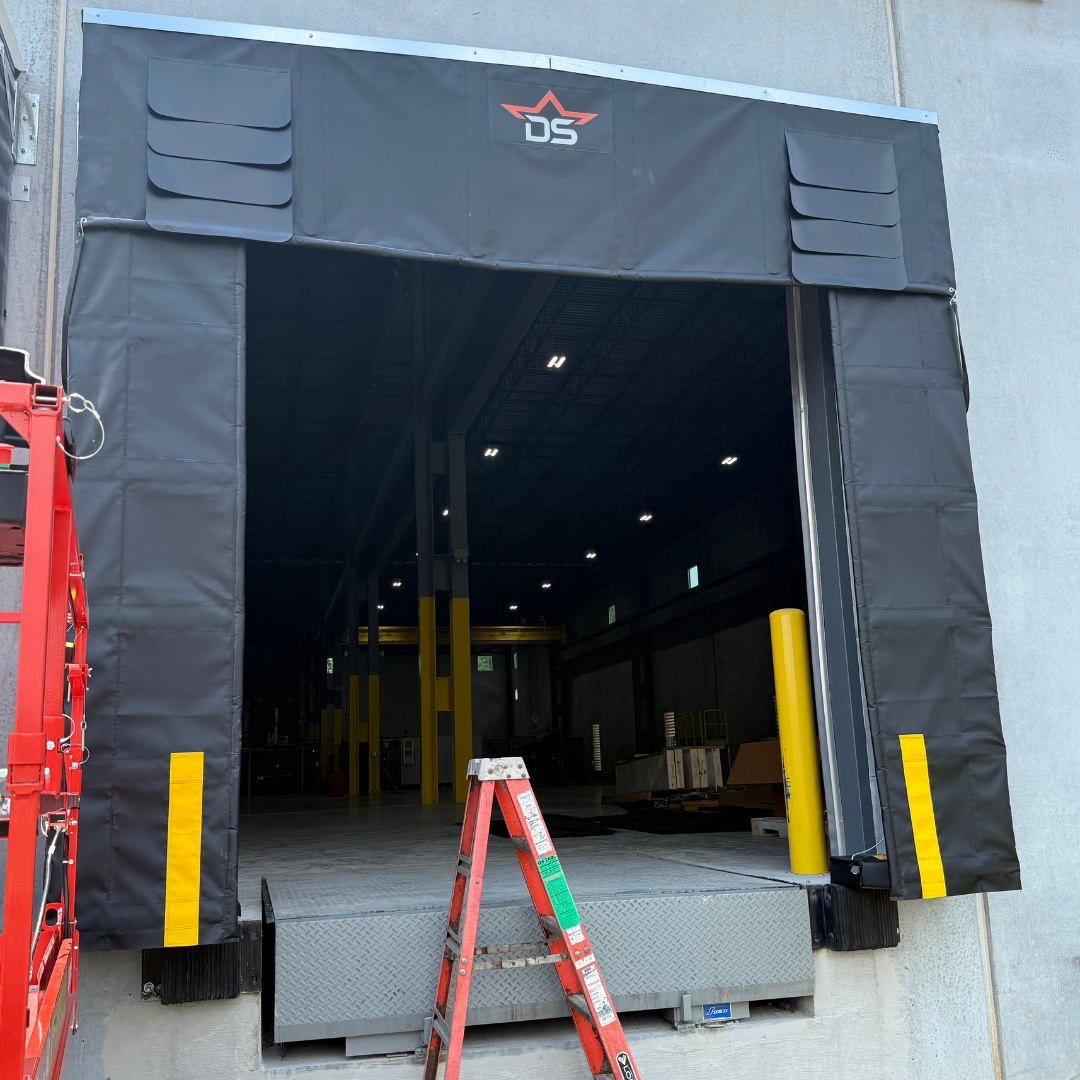
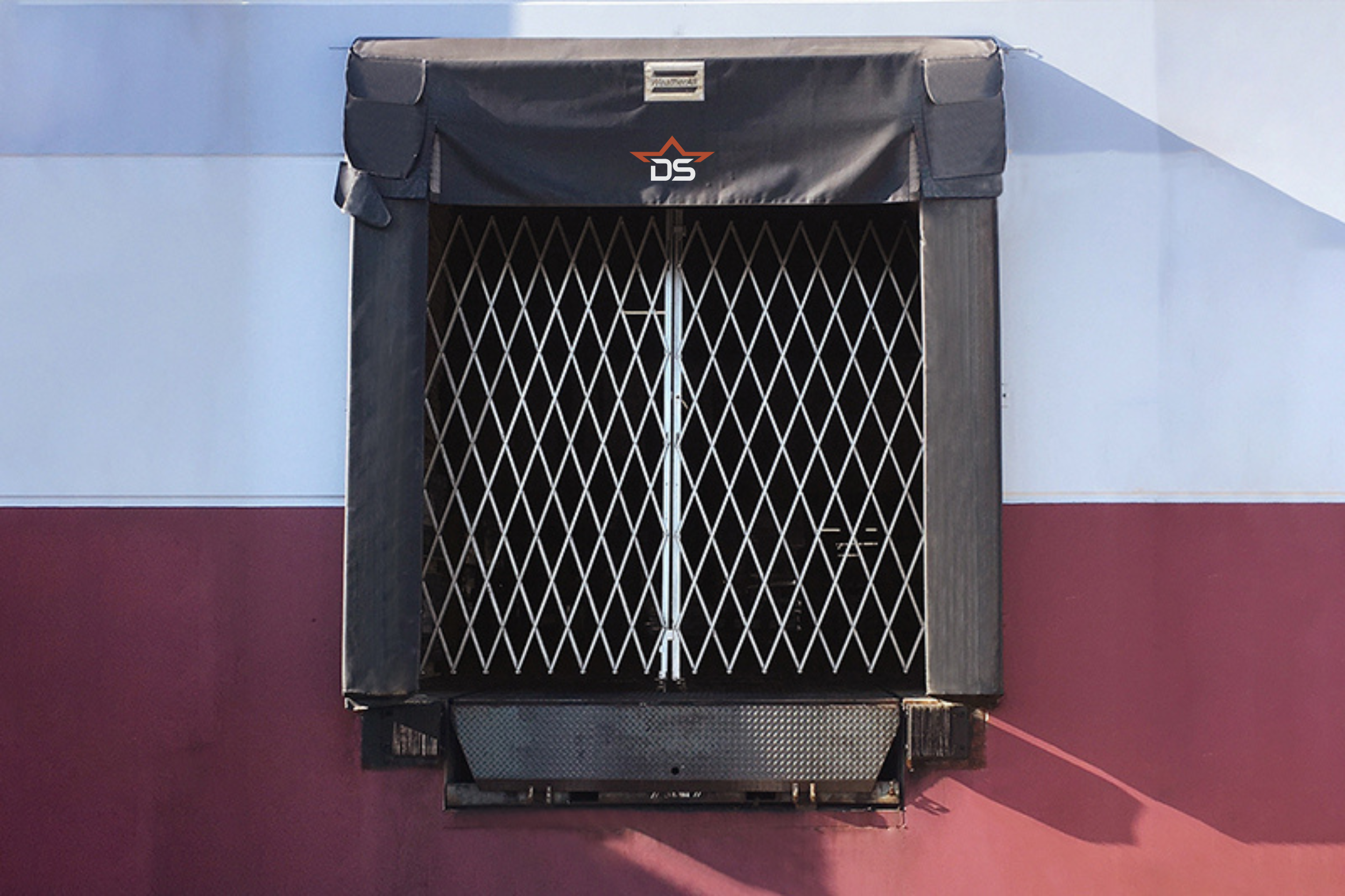
- Shelters preserve most of the opening—great for throughput and visibility.
Levelers, bumpers, restraints—size as a system
- Dock Leveler length: 8′ is common; 10′ tames steeper grades (and thicker bumpers).
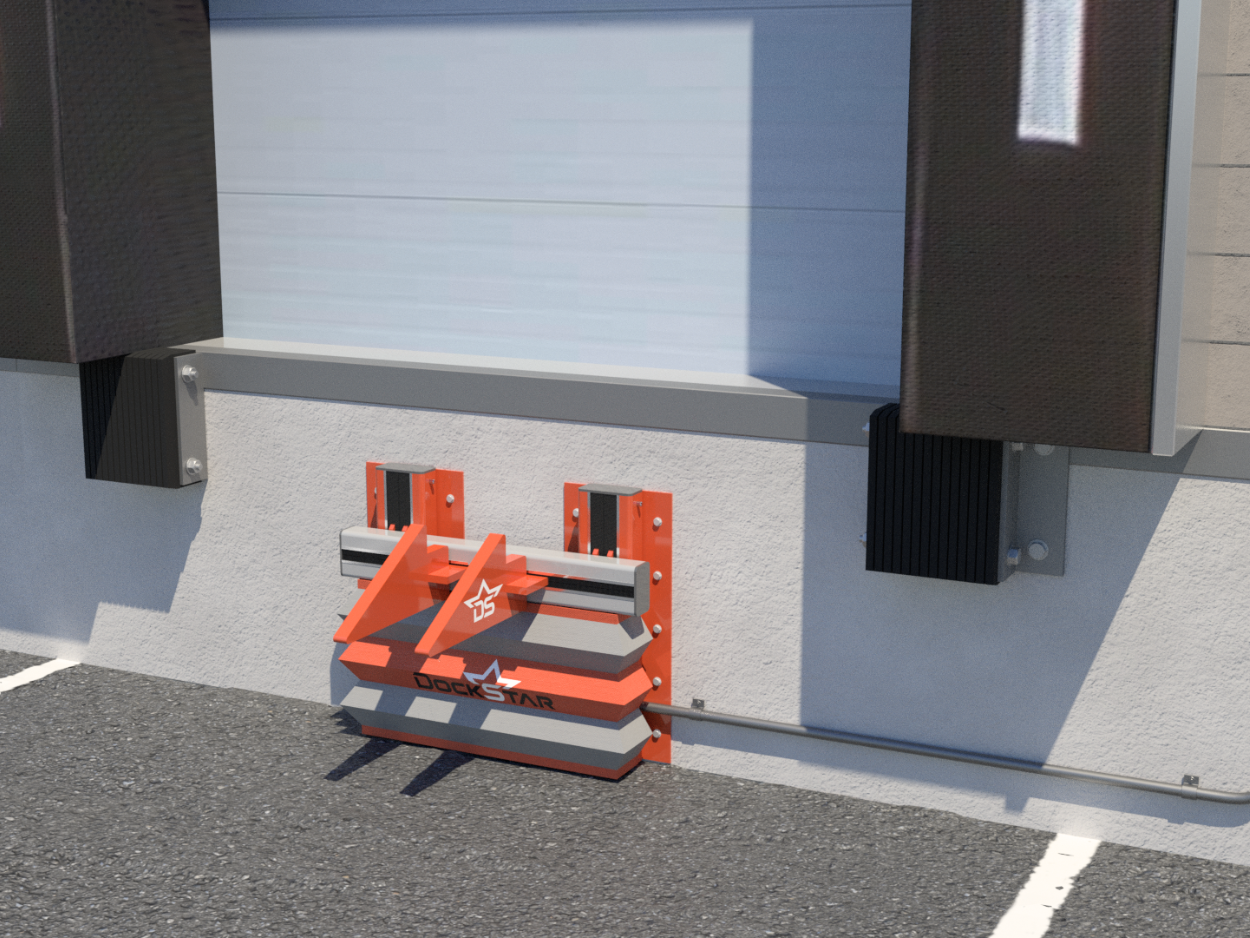
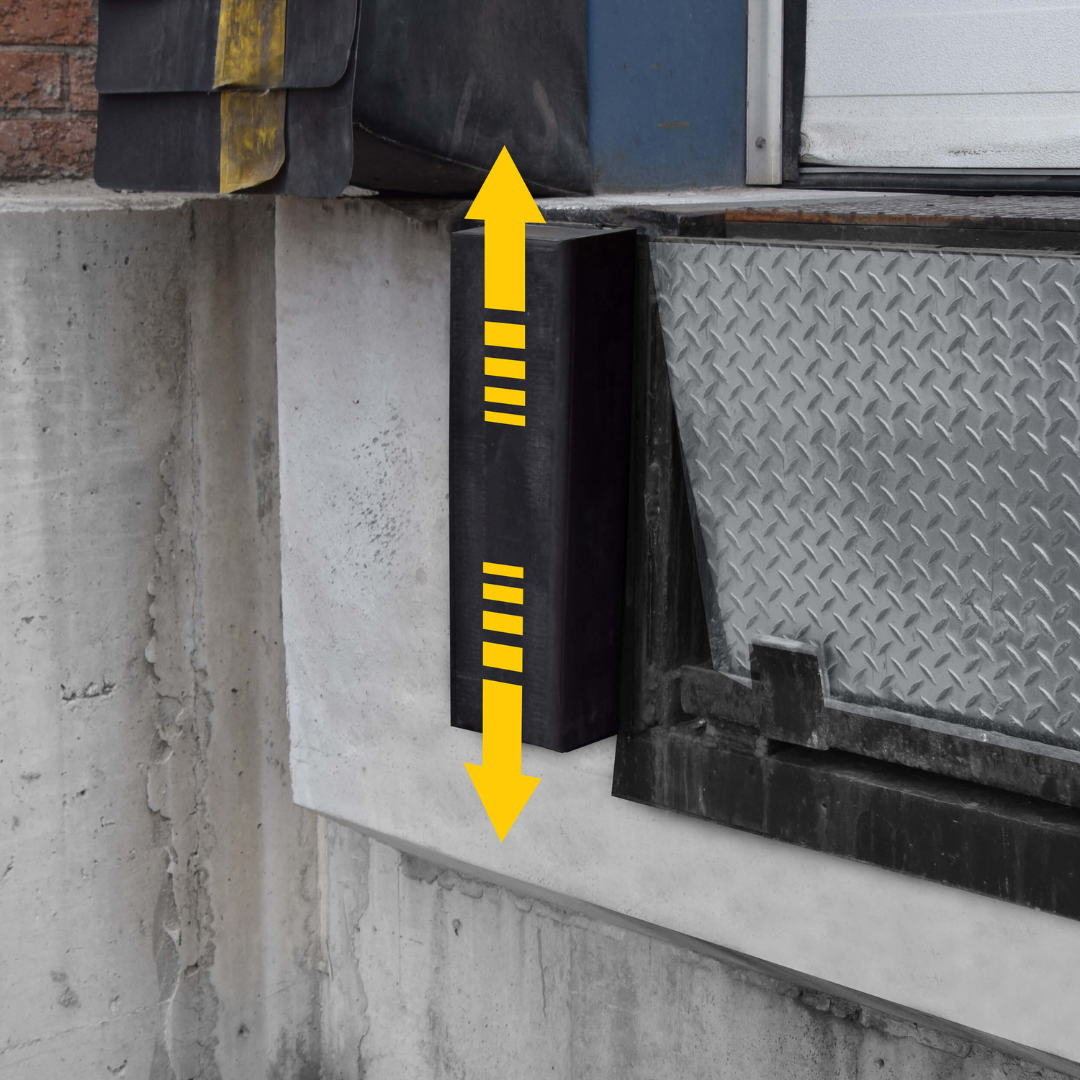
- Bumpers: Thicker = more building protection but more stand-off; ensure the leveler reaches.
- Restraints: Maintain consistent stop depth to ensure seals seat properly every time.
Yard slope cheats your clearance
- Level approach: Standard sizes work.
- Incline toward building: Bed sits lower; watch leveler grade.
- Decline toward building: Bed sits higher; door must be taller (often 10′).
Door type—pick for duty and space
- Sectional insulated: Workhorse; many track options (standard, high-lift, vertical).
- Rolling steel: Tight headroom; strong wind ratings; lower R unless insulated.
- High-speed fabric: Great for climate control and high cycles; impact-friendly.
Quick decision checklist
- Confirm fleet mix (widths, bed heights, % of 102″ trailers).
- Measure dock height and yard slope.
- Choose width: 102″ trailers → 9′ (or 10′ for forgiveness).
- Choose height: default 10′ (go taller with declines/high stacks).
- Match seal/shelter to preserve needed clear opening.
- Verify leveler length vs. bumpers/grades.
Two simple standards most facilities use
- Line standard: 9′ × 10′ sectional insulated, high-lift track.
- Flex/problem bays: 10′ × 10′ with shelters and longer levelers.
Before you wrap up, remember that sizing loading dock doors isn’t a standalone decision. Match the opening to your fleet mix, dock height, and yard slope, then choose seals/shelters, levelers, and operators as one package. Standardize where you can (most bays), and keep a couple of “problem-solver” bays larger for odd loads or tougher approaches.
Key Takeaways
- Default size: For modern 102″ trailers, standardize on 9′ × 10′ doors.
- Go bigger when needed: Use 10′ × 10′ for cold storage, high stacks, tight yards, new drivers, or declined approaches that eat header clearance.
- Avoid the squeeze: 8′ widths are legacy/parcel; with compression seals they’re tight for 102″ trailers and slow loading.
- Seal choice changes clear opening: Compression seals reduce usable width/height; shelters keep most of the opening clear—great for throughput and visibility.
- Height matters more than you think: Start at 10′ tall to protect forklift masts and product. Only go shorter with level approaches and modest loads.
- Size the whole system: Match door size with leveler length (8’–10′), bumper thickness, and vehicle restraints so grades stay safe and seals seat consistently.
- Check the yard slope: A decline toward the building raises trailer floors at the header—another reason to choose 10′ height and longer levelers.
- Pick door types by duty/space: Sectional insulated (workhorse), rolling steel (tight headroom/wind), high-speed fabric (high cycle/climate control).
- Track choices free headroom: High-lift or vertical-lift tracks keep panels out of the forklift path.
- Standardize to simplify: Make most bays 9′ × 10′; keep a few 10′ × 10′ “flex” bays for problem loads.
- Document before buying: Record fleet mix, dock height, slope, seal/shelter plan, and target duty cycle—then spec doors, levelers, restraints, and operators as one package.
FAQ
1) What’s the most common loading dock door size for modern trailers?
9′ × 10′. It handles 102″ trailers, seal compression, and forklift clearance without overbuilding.
2) When should I choose 10′ × 10′?
Pick 10′ × 10′ for cold storage, heavy traffic, training yards, frequent reefers/high stacks, or declined approaches that eat header clearance.
3) Can I still use 8′ × 9′?
Only if you rarely see 102″ trailers. With compression seals and modern vans, 8′ width is tight and slows loading.
4) Do seals and shelters change the door size?
They don’t change nominal size, but they change clear opening. Compression seals reduce it; shelters preserve it. If using compression seals, favor 9′ or 10′ width and 10′ height.
5) How do levelers and bumpers affect the choice?
Thicker bumpers push trailers outward, increasing the bridge distance and grade. Use longer levelers (8’–10′) and keep 10′ tall doors for headroom at steeper angles.

