













Dock Seal vs. Dock Shelter — Pros, Cons, Costs, & When to Use Each
If you run a busy loading dock, you’re juggling product integrity, worker comfort, energy costs, and throughput. Both dock seals and dock shelters help with those goals—but they aren’t interchangeable. This guide breaks down how each works, when to use which, and the practical details that actually affect performance (like trailer mix, door size, and approach grade). You’ll also get a simple selection checklist, maintenance tips, and a short FAQ.
Quick definitions
What is a dock seal?

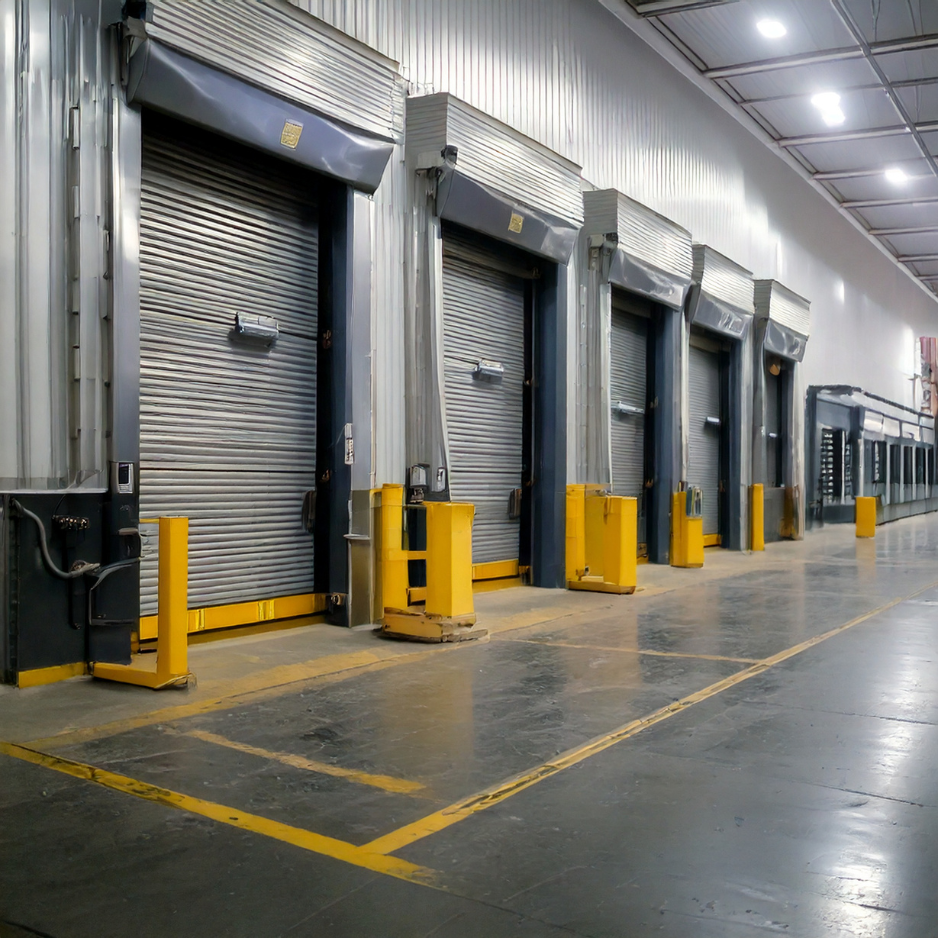
A dock seal uses compressible pads (usually foam) mounted along the sides and head of the door opening. When a trailer backs in, it compresses the pads to form a gasket-like seal. Seals are great for consistent trailer sizes and for operations where tight climate control matters.
What is a dock shelter?

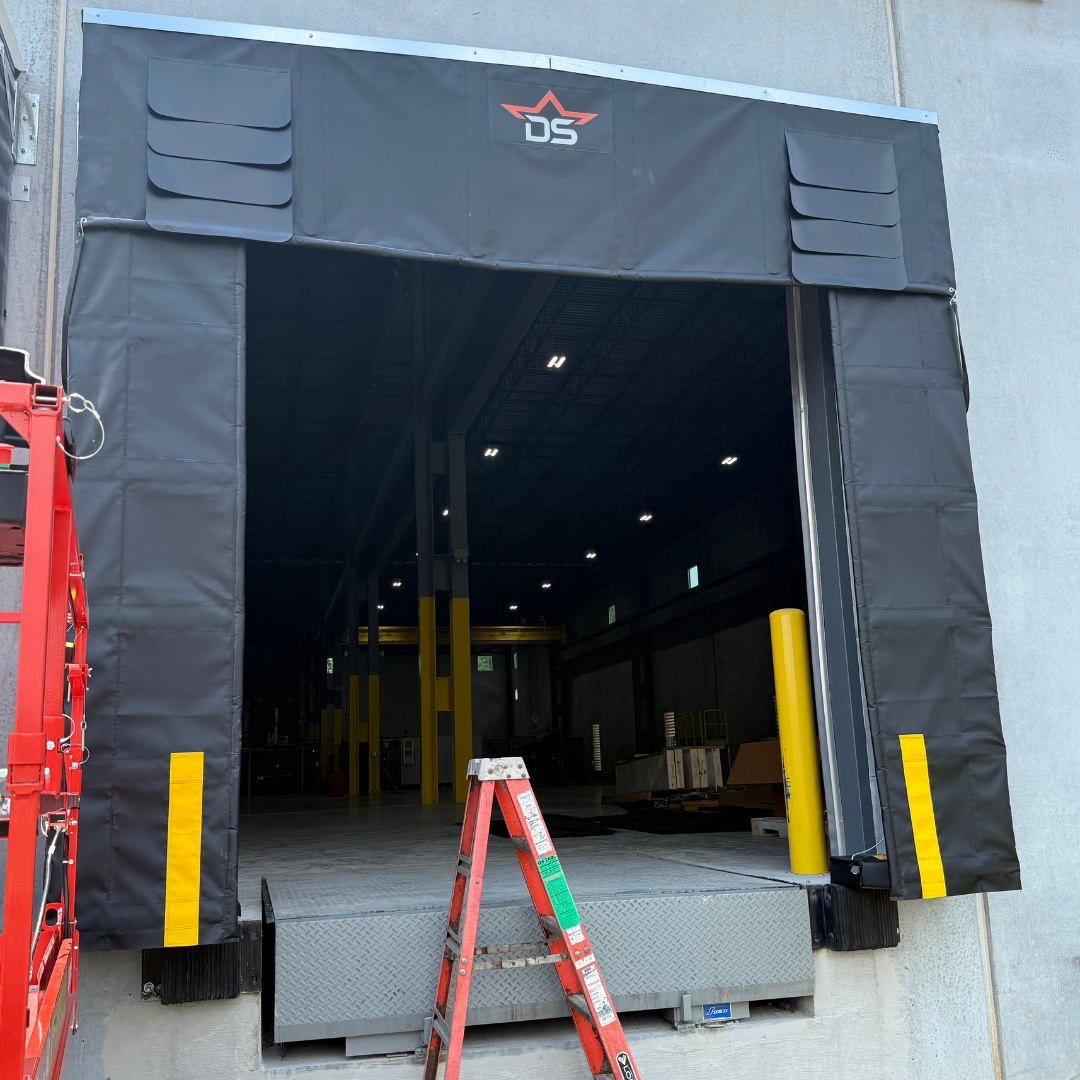
A dock shelter uses a framed structure with fabric (or rigid) curtains around the door perimeter. Instead of compressing pads, the trailer backs into flexible curtains that “wrap” the top and sides. Shelters handle a wider range of trailer sizes and backing angles with less abrasion, so they’re often preferred on high-throughput doors or where you see a mixed fleet.
When a dock seal is the smart choice
Your trailer mix is predictable
If most of your traffic is standard 53′ dry vans at consistent heights, seals usually deliver the tightest closure for the money. Their “gasket” effect reduces drafts and light infiltration around the top and sides, which is especially helpful for conditioned spaces.
Climate control is a priority
In temperature-controlled or food/pharma environments, every gap leaks energy and can introduce moisture, pests, or dust. A well-sized seal (often with a head pad or head curtain) plus under-leveler sealing can create a very tight four-sided closure.
You want simplicity at the door
With seals, drivers back in square and compress. There’s not much fabric exposure in the lane, and fewer components to misalign. That simplicity can make day-to-day operation more consistent across shifts.
When a dock shelter is the better fit
You see a wide variety of trailers
If your doors service reefers with protruding hinges, liftgate trucks, pup trailers, step vans, or containers, shelters are more forgiving. Their perimeter design accommodates hardware protrusions and variable heights/widths without crushing foam pads in odd places.
High cycle volume and durability concerns
Because shelters don’t rely on heavy compression, they typically experience less abrasion per hit. On busy doors that load/unload all day, that often translates into longer service life and fewer fabric tears—especially if you spec reinforced corners and impact plates.
Wider doors or off-center parking
If you’ve got 9’–10′ door widths, oversized loads, or less-than-perfect approach geometry, shelters maintain contact more easily when the trailer isn’t perfectly centered. They also play nicer with trailer swing doors and hinge hardware.
What actually changes for energy, comfort, and product protection?
- Air infiltration is the big energy thief at loading docks. Any gap around the top/sides/under the leveler pulls in outside air, which hurts HVAC performance and causes hot- or cold-spots around the dock.
- Seals tend to be tightest on consistent trailers because they compress directly against the trailer body.
- Shelters win on adaptability, so you’re less likely to have a bad seal due to odd trailer geometry or off-center parking.
- Four-sided closure matters. Even a great top/side seal can lose a lot of air under and around the dock leveler. Under-leveler sealing kits and corner pads are low-cost add-ons with outsized impact.
- Comfort and safety improve when you control drafts and moisture at the threshold—less condensation on the floor, better visibility, and fewer cold/hot spots that workers complain about.
Fit questions that guide the decision
What trailers are you actually seeing?
- Mostly 53′ dry vans, consistent fleet → Seals are usually the tightest, simplest choice.
- Mixed fleet (reefers, liftgates, containers, step vans) → Shelters typically accommodate best; consider inflatable shelters if climate control is critical.
What are your door and dock dimensions?
- Common door sizes: 8×8, 9×9, and 10×10.
- Typical dock height: ~48–52 inches (some sites go higher based on trailer spec and yard grade).
If your doors are on the wider side or you often see off-center approaches, shelters handle variance more gracefully.
How tight do you need the seal?
- Cold storage or tightly conditioned areas → Maximize sealing (seal or inflatable shelter) and close the pit.
- Ambient warehouses → A durable shelter is often the best long-term value when traffic and trailer variety are high.
What’s your cycle volume?
- High cycle, high throughput → Shelters tend to wear better because there’s less constant foam compression.
- Lower cycle, predictable fleet → Seals deliver excellent performance for the cost.
Special options that can tip the scales
Inflatable shelters
Inflatable shelters extend toward the trailer to create a seal and then retract. They combine the adaptability of shelters with seal-like tightness—useful when you’re chasing energy savings on mixed fleets (refrigerated, food, or pharma).
Foam-frame or rigid-frame shelters
In high-wind areas or where trucks don’t square well, a rigid or foam-frame shelter adds structure and stability. Look for abrasion-resistant fabrics, steel-reinforced corners, and replaceable wear pleats on busy doors.
Under-leveler sealing (don’t skip this)
Sealing the pit and corners stops the invisible leaks your team can’t see but your utility bill can. It’s one of the fastest ROI upgrades you can make—and it applies whether you choose a seal or a shelter.
High-speed doors and air curtains
If a door stays open for long stretches (inspection lanes, peak receiving), consider a high-speed roll-up door or an air curtain to limit open-door losses. These complement, not replace, your seal/shelter.
Maintenance and lifespan tips
For seals
- Watch for pad abrasion where swing-door hinges rub. Add wear pleats or beveled pads if you see early wear.
- Replace pads that don’t rebound (compression set) or show waterlogging—both reduce sealing pressure.
For shelters
- Inspect curtain edges and corners for fraying; replace broken fiberglass stays before they create tears.
- Confirm frame alignment after any impact—bent frames compromise contact and shorten fabric life.
For both
- Keep the contact surfaces clean (remove bumper residue, grit, snow/ice).
- Retrain drivers to square up to the dock; off-center approaches shorten the life of any system.
- Add or maintain under-leveler seals during scheduled PMs.
Simple selection checklist (copy/paste into your spec)
- Trailer mix we see most: ________ (dry vans / reefers / liftgates / pups / step vans / containers)
- Door size(s): ________ (8×8 / 9×9 / 10×10 / other)
- Dock height: ________ (target 48–52 in; note any unusual yard grades)
- Climate: ________ (ambient / cooled / frozen)
- Cycle volume: ________ (loads per door per day; shifts per day)
- Pain points to solve: ________ (drafts / moisture / pests / light / energy / worker comfort)
- Add-ons to include: under-leveler sealing ☐ corner pads ☐ impact plates ☐ reinforced fabric ☐ inflatable option ☐ high-speed door ☐ air curtain ☐
Real-world examples (how teams typically decide)
- Grocery DC, mixed fleet, cold chain: Inflatable shelters + under-leveler sealing to handle reefers and keep temps stable with fewer gaps from hinges and hardware.
- E-commerce fulfillment, ambient, high cycle: Rigid-frame shelters with reinforced corners for durability; high-speed personnel doors nearby to limit open-door losses.
- Manufacturing plant, consistent dry vans: Foam-pad seals on 9×9 doors for a tight closure; add corner pads where the dock approach is on a decline and trailers tend to sit lower at the tail.
Cost and ROI considerations (plain-English view)
- Upfront vs. lifetime: Seals often cost less upfront but can wear faster on mixed fleets. Shelters can cost more initially but may last longer on busy doors.
- Energy savings: The bigger your conditioned footprint (and the more extreme your climate), the more a tight system pays you back. Don’t overlook under-leveler sealing; it’s a small line item with a big effect.
- Downtime matters: A solution that resists tears and misalignment saves service calls and keeps doors online—valuable during peak seasons when every minute at the dock counts.
Comparison
Dock Seals vs. Dock Shelters
Quick, practical differences for facility managers choosing between a tight “gasket” seal and a flexible “perimeter” shelter.
| Decision Factor | Dock Seals | Dock Shelters |
|---|---|---|
| Best For Fleet & operation profile | Consistent fleets (standard 53′ vans), climate-controlled areas, food/pharma, tight energy control. | Mixed fleets (reefers, liftgates, pups, containers), variable trailer heights/widths, busy doors. |
| Door Fit Common sizes | Ideal on common openings (≈8×8 to 9×9). Tightest closure when trucks back in square. | Handles wider doors (incl. 9–10 ft) and off-center parking with less performance loss. |
| Energy & Infiltration Practical performance | Highest sealing pressure on consistent trailers; excellent at blocking drafts and light infiltration. | Strong overall when trailer variety is high; inflatable shelters narrow the gap for cold-chain use. |
| Trailer Variety Liftgates, hinges, hardware | Less tolerant of protruding hinges/liftgates; foam abrasion increases with odd geometries. | High tolerance for hardware and variance thanks to flexible curtains and frame. |
| Throughput & Wear High-cycle lanes | More compression wear on pads; plan for wear pleats and periodic pad replacement. | Typically longer life on busy doors (less constant pad compression); reinforce corners for impacts. |
| Maintenance PM focus | Watch for compression set, tears at hinge lines, waterlogging; replace pads as needed. | Inspect curtain edges, fiberglass stays, and frame alignment; swap worn pieces before they fray. |
| Add-Ons That Matter | Under-leveler sealing, corner pads, rain hood/drip guard, beveled pads. | Under-leveler sealing, reinforced corners/impact plates, inflatable head, deeper projection sizing. |
| Pros | Tightest closure on predictable fleets • Simple to operate • Strong energy savings. | Most versatile across trailers • Typically better durability in high-cycle use • Easier with off-center backing. |
| Cons | Less forgiving of liftgates/hinges • Can abrade faster on mixed fleets • Requires square approaches. | May be slightly less “airtight” vs. seals on perfect fleets unless inflatable designs are used. |
| Quick Rule of Thumb | Choose Seals if most trucks are standard vans and climate/energy control is priority #1. | Choose Shelters if trailer types vary, doors are wider, or lanes are very high-cycle. |
FAQ
Which option saves more energy overall—seals or shelters?
On a consistent fleet, seals usually provide the tightest closure and best energy performance. With mixed fleets, shelters (especially inflatable designs) can maintain better real-world contact and reduce leakage that a compressed foam pad might struggle with.
Do I still need under-leveler sealing if I install seals or shelters?
Yes. A lot of air loss happens under and around the leveler. Treat the pit and corners as part of the system if you want true four-sided protection.
What door and dock dimensions should I plan around?
Common door sizes are 8×8, 9×9, and 10×10, and most docks are in the 48–52 inch height range. If your doors are wider or you regularly see off-center backing, shelters handle the variation more easily.
How do liftgates and reefer hinges affect the choice?
Liftgates, protruding hinges, and hardware create interruptions that can tear or deform foam pads. Shelters (or inflatables) flex around those features and usually last longer in that environment.
How long do these systems last?
With decent PM, seals and shelters often last years. Lifespan hinges on trailer mix, cycle volume, driver habits, fabric selection, and add-ons like impact plates and reinforced corners.
Key takeaways
- Seals are ideal when your fleet is consistent and you need the tightest possible closure—especially for climate-controlled or food/pharma applications.
- Shelters excel with mixed fleets, wider doors, and high cycle volumes, delivering good protection with less day-to-day wear.
- The biggest performance boost comes from full-perimeter closure: top/sides plus under-leveler sealing.
- Choose fabrics, reinforcements, and options (inflatable, impact plates, high-speed doors, air curtains) based on traffic, climate, and approach geometry—not just sticker price.
