













Do I Really Need Vehicle Restraints for My Loading Docks?
If your facility runs forklifts on and off trailers all day, you’ve probably asked this: do we really need vehicle restraints, or are wheel chocks “good enough”? Short answer: restraints dramatically lower your risk of trailer creep, unexpected pull-aways, and dock-to-trailer gaps—the exact failure modes that lead to the most severe, expensive incidents on the dock. Below, we break down the safety case, compliance landscape, ROI math, and selection criteria so you can decide with confidence.

What Problem Do Vehicle Restraints Actually Solve?
Trailer separation at the dock happens in a few predictable ways:
- Trailer creep: vibration from lift trucks slowly walks a trailer away from the dock, opening a dangerous gap.
- Early pull-away: a driver pulls out before loading is complete (miscommunication or process failure). MHL News
- Landing gear collapse / uneven yard: a trailer sags or shifts, changing the height and causing a lip gap.
When these happen, the forklift operator is the one at risk—falling off the dock edge or into the gap and potentially being crushed. National safety data consistently shows forklifts remain one of the most hazardous elements in industrial operations, with dozens of fatalities annually and tens of thousands of serious injuries.
What Do OSHA and Standards Actually Require?
Here’s the plain-English version:
- OSHA requires you to prevent trailer movement when using powered industrial trucks. The standard 1910.178(k)(1) says truck brakes must be set and wheel chocks placed to prevent rolling while boarded by powered industrial trucks. Restraint systems can be used to meet the same safety objective. OSHA
- OSHA acknowledges vehicle restraints as an effective means. In a formal interpretation, OSHA notes trailer creep/pull-away are recognized hazards, and if restraint systems are not used, trailers must be properly chocked. In other words: restraints are a recognized control; chocks are the minimum if you don’t have them. OSHA
- ANSI MH30.3 defines performance and testing requirements for vehicle restraining devices—useful when comparing vendors/specs. ANSI Webstore+1
Bottom line on compliance: OSHA doesn’t say “you must have dock locks,” but it does require you to prevent trailer movement. Restraints are the most reliable, auditable way to do that—especially where chocks alone are inconsistent (wet pavement, snow/ice, driver noncompliance).
Why Restraints Beat Wheel Chocks (Most of the Time)
Consistency and Control
Chocks rely on humans to place and remove them correctly each time. Restraints integrate with your dock position (interlocks, dock lights, door controls) so the state of the trailer is visible and tied to safe sequencing. Fewer variables = fewer surprises. OSHA
Stronger Mitigation for Creep and Pull-Away
Chocks help with rolling; they don’t stop a driver from pulling away. Properly installed restraints (hook or rotating-hook styles) physically capture the RIG/ICC bar to prevent departure. ANSI MH30.3 performance testing gives you an apples-to-apples way to compare holding forces. ANSI Webstore
Better Communication (Interlocks & Lights)
Modern systems tie into red/green external dock lights and inside dock operator lights, reinforcing a single source of truth: trailer secure = go; not secure = stop. That visual layer is a huge win in noisy dock environments.
Risk and Statistics Facility Leaders Care About

- Forklift fatalities and serious injuries remain significant. NSC reports 67 forklift-related work deaths in 2023, with tens of thousands of serious cases causing time away from work in 2021–2022. Injury Facts
- Drop-off and separation events are meaningful contributors. Safety+Health notes about 7% of reported forklift accidents involve driving off the dock edge—typically when trailers aren’t present or aren’t safely restrained. safetyandhealthmagazine.com
- Loading docks are consistently flagged as high-risk areas. Insurance and safety organizations commonly cite the dock as a disproportionate share of warehouse incidents; OSHA fatality investigations regularly include “caught between truck and dock” cases. MEMICOSHA
These aren’t abstract numbers—they describe the exact failure modes vehicle restraints are designed to prevent.
Cost vs. Consequence: The ROI of Restraints
When you weigh a restraint system against incident costs, it’s rarely close:
- Direct costs: Workers’ comp, medical, equipment damage (fork, dock leveler lip/hinge, door tracks), product loss, trailer damage.
- Indirect costs: Downtime, OSHA scrutiny, retraining, turnover, morale, and insurance premiums.
- Reputation & contracts: Major shippers increasingly expect dock safety controls (and audit trails).
Even one avoided event (forklift drop, caught-between) can justify a multi-dock rollout. Facilities often pair restraints with interlocked doors/levelers so loading physically can’t begin until the trailer is captured—reducing both human error and gray areas in incident investigations.
When Might Wheel Chocks Be Sufficient?

Chocks can be acceptable in low-throughput, low-risk scenarios where:
- Only occasional pallet jacks (no sit-down lifts) board trailers
- Yard is flat, dry, and well-maintained year-round
- A tight SOP verifies brake set + chocks placed, every time, with documented checks
- No history of early pull-aways or near-misses
But as throughput, seasonality, third-party drivers, and forklift traffic increase, the reliability gap between chocks and restraints becomes obvious. OSHA explicitly recognizes trailer creep and pull-away hazards, and while chocks meet the letter of the standard when properly used, restraints better address the real failure modes.
How to Choose the Right Vehicle Restraint
1) Engagement Method
- Hook/Rotating-Hook (RIG capture): Grabs the ICC/RIG bar; excellent for most modern trailers; high holding force; often best all-around. Check compatibility with worn or bent RIG bars.
- Wheel-based Restraints: Clamp or block a wheel; useful for liftgates, pintle hooks, or trailers without a compliant RIG bar (some intermodal or specialized equipment).
- Automatic vs. Manual: Automatic reduces operator steps and speeds turns; manual can be more economical but relies on procedure discipline.
2) Interlocks & Controls
Look for integrations that won’t allow the dock door or leveler to operate until the trailer is captured. Tie your red/green lights inside and outside the dock to the restraint state for unmissable communication.
3) Environment & Mounting
- Climate: Snow/ice, standing water, and grit affect both chocks and some wheel-based systems. Heated or self-clearing housings matter in northern climates.
- Concrete condition: Verify anchor specs and pull-out strength; follow manufacturer install requirements per ANSI guidance.
4) Yard Realities
- Mixed fleets? Validate on liftgates, intermodal chassis, day cabs with different bumper heights, and bent RIG bars. Do a hands-on pilot with your most troublesome trailers.
- Backup plan: Keep high-friction chocks for outliers; write the fallback into the SOP.
5) Visibility & Training
- Clear, standardized SOP posters at each bay
- Trucker placards explaining the red/green system
- Operator training that includes near-miss reporting and what to do if a restraint won’t engage
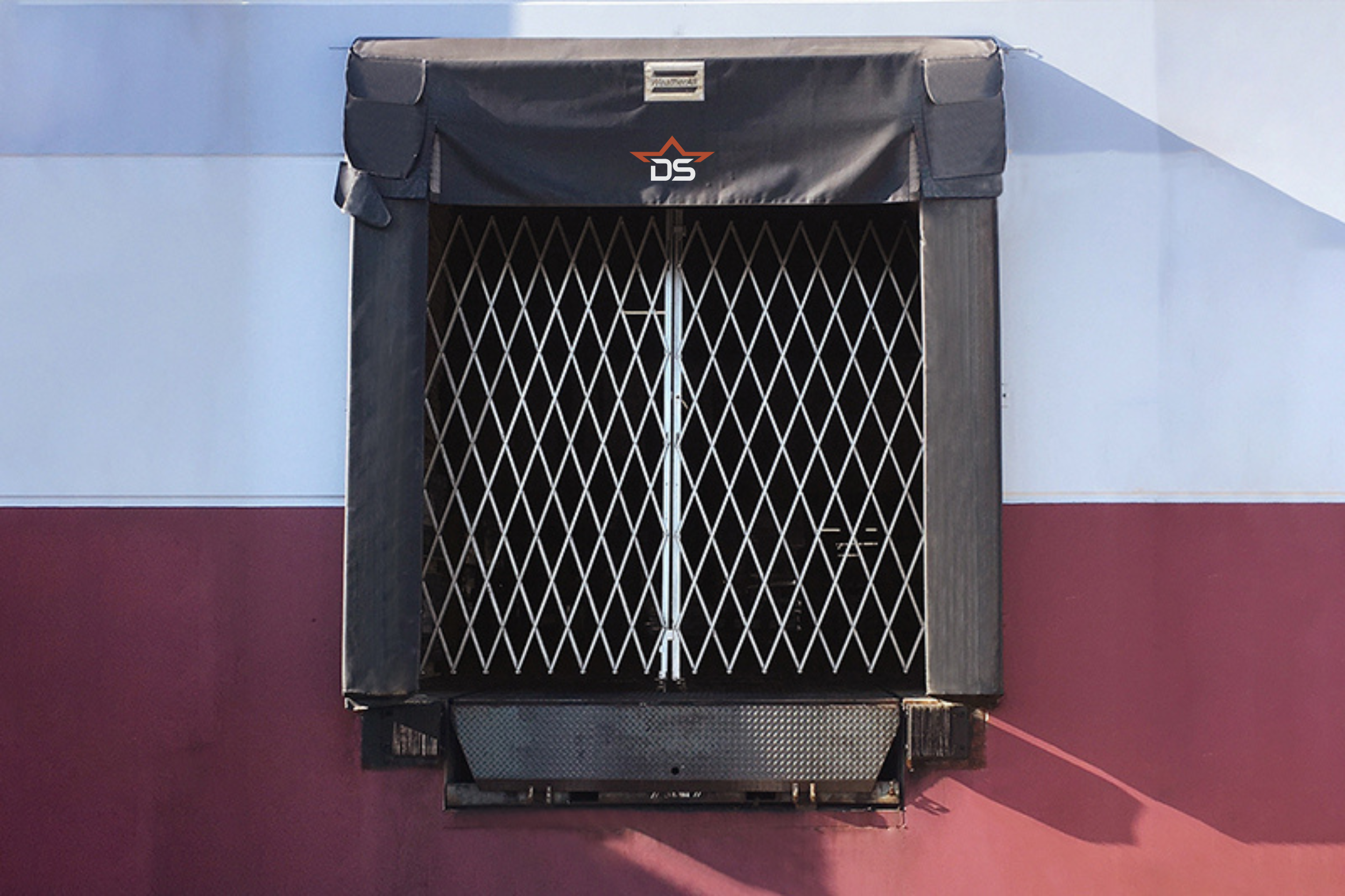
Why DockStar’s Dual Barrier Restraint Is a Smarter, Safer Investment
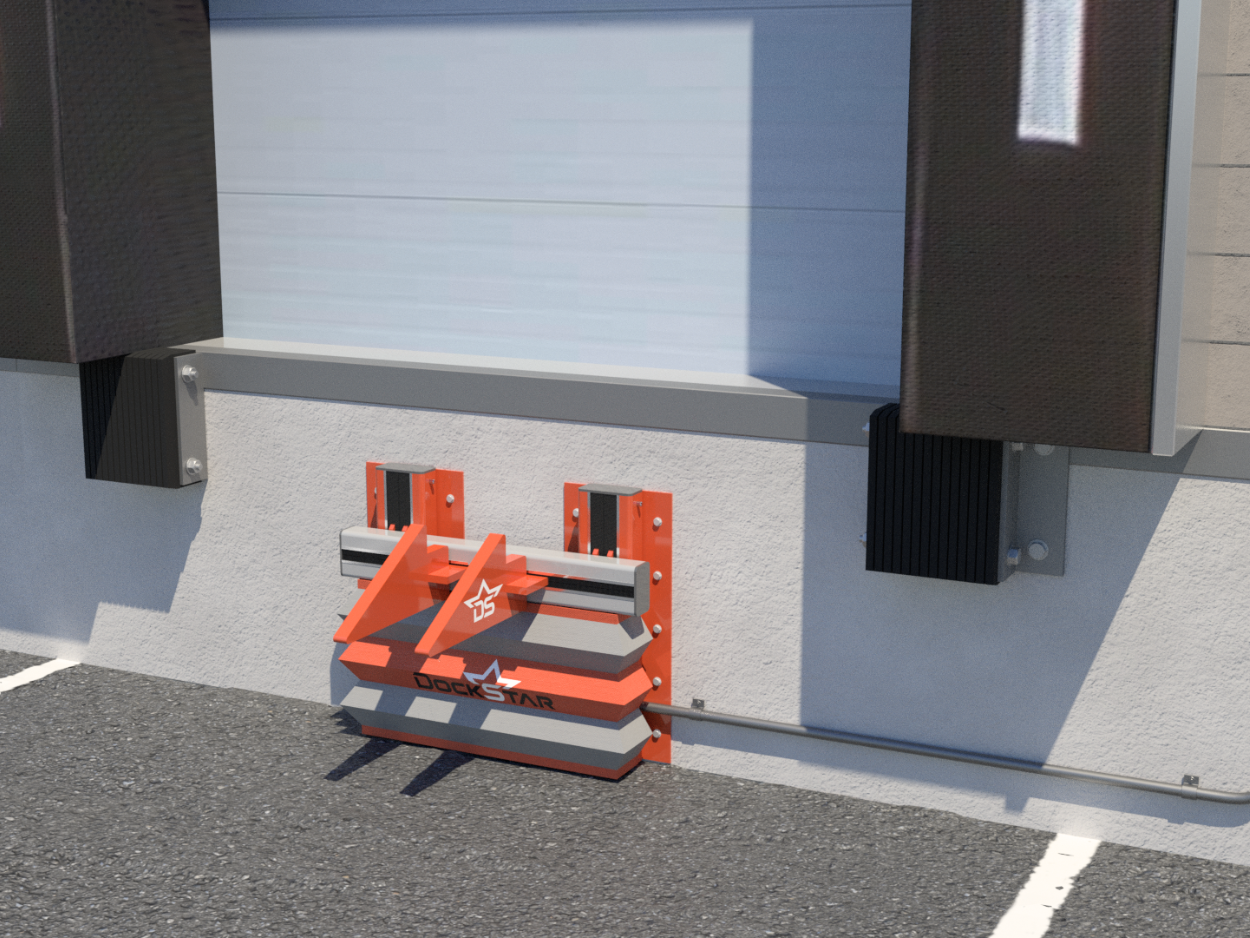
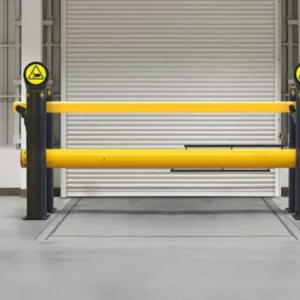
When you’re comparing vehicle restraints, not all systems are created equal. DockStar’s Dual Barrier Restraint is engineered with twice the holding power of standard single-barrier units, giving your team an extra layer of protection where it matters most—at the dock face.

Twice the Power, Twice the Confidence
Most restraints rely on a single point of contact with the trailer’s ICC/RIG bar. That works—until you’re dealing with heavy vibration, aggressive forklift traffic, or worn trailer gear. Our dual barrier system engages on two planes, delivering far greater holding force and significantly reducing the risk of a truck “walking” or pulling free under stress. For high-volume docks where trailers are loaded heavy and fast, that extra power isn’t just a nice-to-have—it’s peace of mind.
Less Likely to Rip Out of the Dock
Traditional restraints can put intense stress on one anchor point, which increases the risk of the entire system loosening or even tearing free from the concrete over time. DockStar’s dual-barrier design spreads the load across two reinforced points. This not only minimizes wear on your dock structure but also makes it much less likely for the restraint itself to be forced out of place by repeated impact or a premature driver pull-away.
Built-In Safety Advantage
Every year, thousands of dock incidents are traced back to trailers shifting away from the dock. With a dual barrier in place, you’re stacking the deck in your favor—physically preventing separation where single systems might fail. The result? A safer environment for your forklift operators, reduced risk of catastrophic accidents, and stronger compliance footing if OSHA or insurers come asking about your controls.
Operational ROI
- Longer lifespan thanks to reduced structural stress.
- Fewer emergency calls for bent or broken restraints.
- Reduced downtime from dock closures caused by equipment failure.
- Enhanced audit confidence—being able to say your facility runs the most secure restraint system on the market is a selling point to shippers and corporate safety teams alike.
In short, DockStar’s Dual Barrier Restraint isn’t just stronger—it’s smarter. It gives you more holding force, longer equipment life, and a visibly safer dock. For facilities running nonstop shifts, that’s the difference between a near miss and a rock-solid safety culture.
FAQs
Are vehicle restraints required by OSHA?

OSHA doesn’t mandate a specific device, but it does require preventing trailer movement when forklifts board a truck (brakes set and chocks if you don’t use restraints). Restraints are a recognized control to meet that requirement and address trailer creep/pull-away risks more reliably than chocks alone.
Do restraints eliminate the need for wheel chocks?
In many jurisdictions and company policies, yes—if you’re using a positive mechanical means that secures the trailer and it’s maintained properly, chocks may not be required for that bay. Always verify with your EHS policy and local guidance. (Many safety authorities treat dock locks as an acceptable alternative to chocks when installed and maintained to spec.) MN Department of Labor
What about unusual trailers or damaged RIG bars?
Have a documented fallback (e.g., wheel-based restraint or high-friction chocks) and a “no green, no go” rule. During vendor trials, test the worst-case fleet: liftgates, intermodal chassis, and bent bars.
How big is the actual risk we’re mitigating?
Recent national data shows 67 forklift-related work deaths in 2023 and tens of thousands of serious injury cases in 2021–2022; dock edge incidents are a meaningful slice (about 7% of reported forklift accidents). Loading Dock Restraints directly tackle those separation/drop-off scenarios. Injury Facts
What should I ask vendors before I buy?
- Certified performance per ANSI MH30.3
- Holding force and engagement range (height and bumper variances)
- Interlock options (door/leveler/traffic lights)
- Diagnostics/alerts and remote status visibility
- Maintenance intervals, parts availability, and response time SLAs
The Business Case You Can Take to Leadership
- Risk reduction: Directly addresses the highest-severity dock hazards—separation and drop-off.
- Operational clarity: Green/red light logic and interlocks turn a gray area into a binary state, reducing delays and arguments with carriers.
- Auditability: Electronic logs and visible indicators help during investigations and customer audits.
- Culture: Sends a visible signal that the company invests in operator safety—not just productivity.
Key Takeaways
- If you run forklifts on/off trailers, vehicle restraints are strongly recommended. They’re the most reliable way to prevent trailer creep and early pull-aways, the exact scenarios that lead to catastrophic dock events.
- OSHA requires the hazard to be controlled; restraints are a recognized method and frequently outperform chocks in real-world consistency.
- Standards exist to compare products. Use ANSI MH30.3 performance/testing to evaluate options apples-to-apples.
- The numbers justify it. With 67 forklift-related deaths in 2023 and a notable share of incidents tied to dock edges/separation, the cost of one serious event dwarfs the system price.
- Pair restraints with interlocks, lights, and a “no green, no go” SOP to lock in the safety gains and speed up operations.


